SACRED SCHISM THE UNTHINKABLE TRUTH BEHIND WHY THE FIRST AMERICAN POPE HAS TURNED HIS BACK ON THE WHITE HOUSE
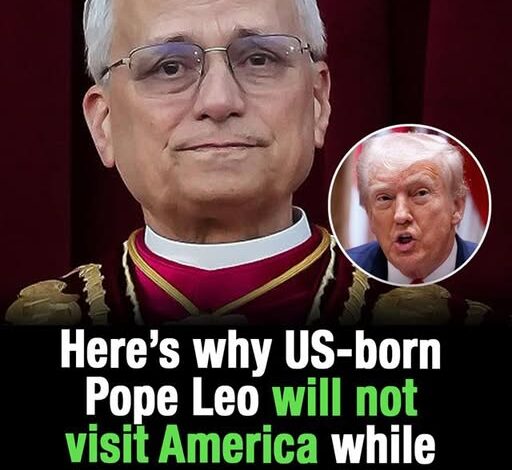
The geopolitical landscape was forever altered the moment the white smoke rose from the Sistine Chapel and the world learned that for the first time in the history of the Catholic Church an American had ascended to the Chair of Saint Peter. The election of Pope Leo XIV was initially greeted in the United States with a sense of patriotic fervor and a naive expectation that the Vatican and the White House were about to enter a golden age of unprecedented alignment. However as the months have turned into a years the celebratory atmosphere has curdled into a cold and baffling reality. The global spotlight has shifted away from the anticipated homecoming and toward a deepening fracture—a spiritual and diplomatic schism shaped not by fiery rhetoric or open hostility but by a profound and calculated silence that has reached a breaking point.
At the heart of this tension is a fundamental disagreement over the very nature of power and the responsibility of leadership. While Washington operates within a framework defined by national security border integrity and the cold calculus of geopolitical interest Pope Leo XIV has steered the bark of Peter toward an entirely different horizon. He has replaced the traditional proximity to secular power with a radical proximity to human suffering. This is not merely a difference in style or personality but a tectonic shift in the moral architecture of the Holy See. The American Pope has seemingly decided that his shared nationality with the leaders of the free world is an irrelevant detail compared to the universal mandate of his office. In doing so he has signaled a deliberate and stinging distance from the political climate of his home country a move that many in the White House view as a personal and professional snub.
The most visible manifestation of this rift is the conspicuous absence of a papal visit to American soil. In the high stakes world of international diplomacy a leaders choice of destination is the ultimate signal of their priorities. By delaying a return to the United States while simultaneously embarking on exhaustive pilgrimages to the forgotten corners of the globe—conflict zones in Central Africa migrant encampments on the fringes of Europe and impoverished coastal villages in Southeast Asia—Leo XIV is communicating with devastating clarity. He is suggesting that the centers of global power are no longer the centers of spiritual relevance. This absence speaks louder than any encyclical could. It is a quiet but firm rejection of the idea that the Vatican is an auxiliary to Western political interests. To the administration in Washington this silence feels like a betrayal of the cultural and national ties that many assumed would bridge the gap between the two powers.
The ideological divide between the two institutions has become a chasm that no amount of diplomatic smoothing can hide. The White House continues to emphasize a doctrine of sovereignty and national preservation whereas the Pope has focused his gaze on those living at the margins of society—the refugees the displaced and the victims of the very global systems that Washington seeks to maintain. These two frameworks are not merely different they are increasingly in direct opposition. When the Vatican speaks of a moral imperative to open borders and show radical compassion it strikes a discordant note against a Washington policy focused on walls and restricted entry. This tension has transformed what was once a cordial relationship into a cold stalemate where communication continues through formal channels but without a single spark of warmth or mutual understanding.
Reports from within the Vatican suggest that the Holy Father views his unique position as the first American Pope as a mandate to prove the Church’s independence from American hegemony. He is acutely aware that any sign of favoritism toward the United States would undermine his credibility with the global south where the vast majority of the Catholic faithful now reside. Consequently he has adopted a posture of deliberate neutrality that often feels like a targeted critique of American exceptionalism. By choosing not to visit he is essentially stripping the White House of the symbolic legitimacy that a papal blessing provides. This is a form of discipline that has left political strategists scrambling. How do you respond to a leader who isn’t attacking you but is simply acting as though you are not the center of the universe?
The restraint shown by both sides only adds to the eerie atmosphere of this diplomatic freeze. Neither the Pope nor the President has moved to escalate the conflict with public declarations of enmity. Instead they engage in a shadow war of subtext and scheduling. Every time a papal envoy bypasses a high level meeting in D.C. or the Pope issues a statement on environmental justice that indirectly challenges American industrial policy the wedge is driven deeper. In a modern era where disagreement is usually loud and performative this quiet withdrawal is far more unnerving. It suggests a permanent shift in the relationship rather than a temporary spat. The restraint is not a sign of peace but a reflection of two forms of authority—one moral and one political—that have realized they no longer move in the same direction.
Beyond the headlines and the frantic interpretations of pundits the reality is that Pope Leo XIV is redefining what it means to be a global leader in the twenty first century. He is demonstrating that influence does not always flow toward the greatest concentration of wealth and weapons. By standing apart from the White House he is reminding the world that spiritual authority must remain un-tethered from any single national identity if it is to remain credible. This holding of the line is a quiet revolution. It is a reminder that the Vicar of Christ is not a diplomat in chief for the West but a voice for a kingdom that recognizes no borders.
The final thought for many observing this unfolding drama is that shared nationality is a poor guarantee of shared vision. The American identity of the Pope has not made him an ally of the American government; it has perhaps made him its most effective and subtle critic. He knows the American system from the inside and his decision to distance himself from it suggests a deep seated belief that the current political direction of the United States is incompatible with the core tenets of his faith. For now Leo XIV remains focused on the edges of the world looking toward those who have no voice in the halls of Washington. This is not a rejection of his roots but a transcendent evolution of them. He is proving that holding a line quietly and consistently can shape the world more profoundly than any loud declaration. The Vatican feud has reached a breaking point and the silence coming from Rome is the loudest sound in the world today.