A Police Officer Embraced His Loyal Service Dog at the Vet — Then Something Unexpected Happened
A heavy silence filled the veterinary clinic early that morning, as staff prepared one of the examination rooms for a case they understood was emotionally difficult for everyone involved.
The atmosphere inside the building was noticeably subdued, with technicians and assistants moving carefully through the halls, speaking in quiet voices as they prepared for a critical medical consultation.
This was not a routine visit or standard check-up. Everyone present understood that the situation involved a long-serving police dog whose condition had worsened significantly in recent days.
Officer Alex Voronov arrived shortly afterward, carrying his service dog, Rex, a German Shepherd who had served alongside him for many years in police operations and field assignments.
Despite Rex’s strong build and size, Alex held him carefully and close, showing clear concern for the dog’s weakened condition as they entered the clinic together.
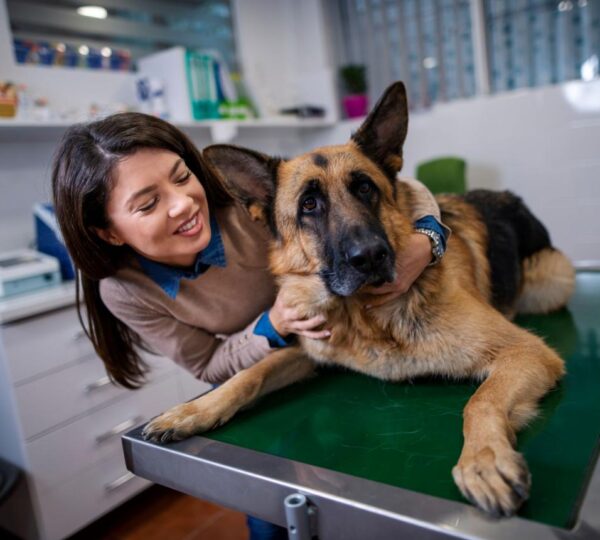
Rex had once been known for his strength, endurance, and alertness during active duty, but on this day his body appeared visibly tired, reflecting the seriousness of his illness.
As they moved toward the examination room, the emotional weight of the moment was already evident, even before any medical evaluation had begun.
Rex had served with the police department for approximately eight years, during which he developed a reputation as a dependable and highly trained service dog.
Throughout his career, he participated in search operations where his tracking abilities helped locate missing individuals in challenging environments such as forests and rural areas.
His specialized training also allowed him to assist in detection work, supporting officers in identifying concealed items during investigations involving illegal substances or suspicious activity.
In addition to search and detection duties, Rex had also been present during various field operations where service dogs provide support and situational awareness to officers.
Over time, his partnership with Officer Alex Voronov became defined not only by duty but also by trust, consistency, and shared experience in demanding working conditions.
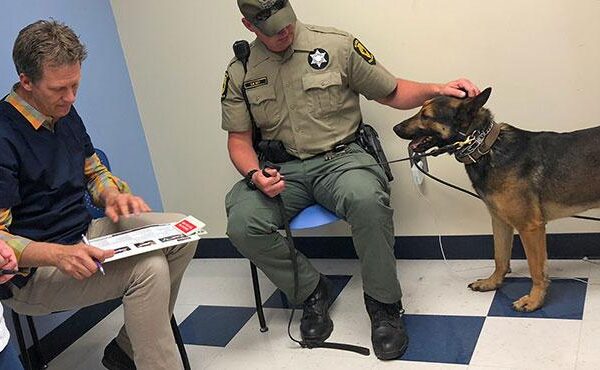
For Alex, Rex was not simply a trained working animal but a long-term partner who had been present through years of professional challenges and field assignments.
Their bond had developed gradually through routine work, mutual dependence, and countless hours spent together in both high-pressure and everyday operational environments.
At the clinic, Dr. Elena, the veterinarian overseeing Rex’s case, reviewed medical records carefully while preparing for a detailed evaluation of his condition.
Additional staff members and a few officers from the department were also present, offering support and ensuring that the situation was handled with care and respect.
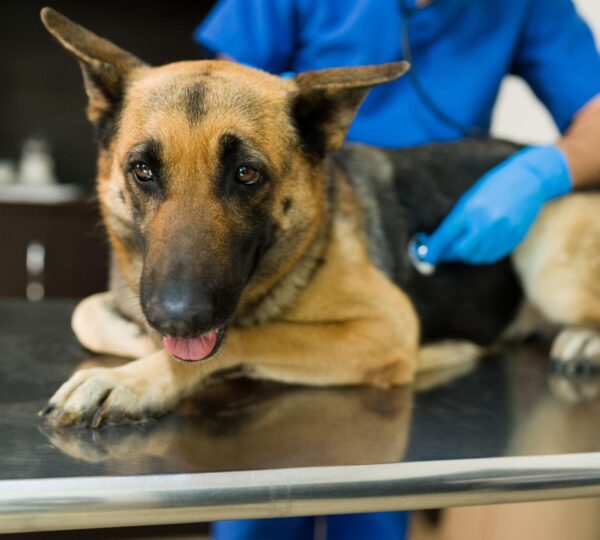
The examination room remained quiet as Rex was gently placed on the table, with Alex keeping his hand resting on the dog’s neck for comfort and reassurance.
Alex was deeply familiar with Rex’s physical behavior and could immediately sense that something was wrong, as the dog’s breathing appeared weak and irregular.
After a series of preliminary tests and evaluations, the veterinarian took a moment before explaining the seriousness of the medical findings in a calm and careful tone.
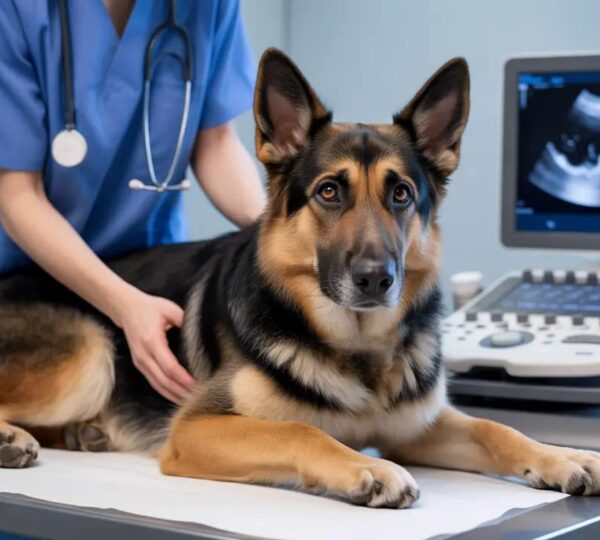
She stated that Rex’s condition involved severe internal complications, including significantly reduced kidney function and fluid accumulation affecting his respiratory system.
The veterinarian explained that the results indicated advanced illness and that the dog’s body was under considerable stress, making recovery increasingly unlikely.
Alex listened closely and asked whether any treatment options remained available, hoping for a possibility that could improve Rex’s condition.
The veterinarian paused before responding honestly that continued treatment would not likely reverse the condition and might only prolong discomfort without meaningful improvement.
Her explanation reflected the difficult reality of veterinary medicine in severe cases where options become limited despite medical intervention.
The room remained silent after her statement, as everyone present absorbed the emotional weight of what had been explained.
Rex’s condition had reached a stage where the department had already approved formal authorization for euthanasia to prevent further suffering.
Alex had signed the documentation earlier that day, understanding that the decision was made to prioritize the dog’s comfort and dignity.
The officers present approached Rex one by one, gently speaking to him and expressing gratitude for his years of dedicated service to the department.
Each interaction reflected the emotional connection formed between working dogs and the officers who rely on them in daily operations.
Alex leaned closer to Rex and spoke softly, reassuring him and remaining by his side during the most difficult part of the process.
As preparations continued, the atmosphere in the room became increasingly emotional, reflecting the seriousness of the moment.
However, just as the procedure was about to proceed, an unexpected movement from Rex changed the immediate focus of everyone present.
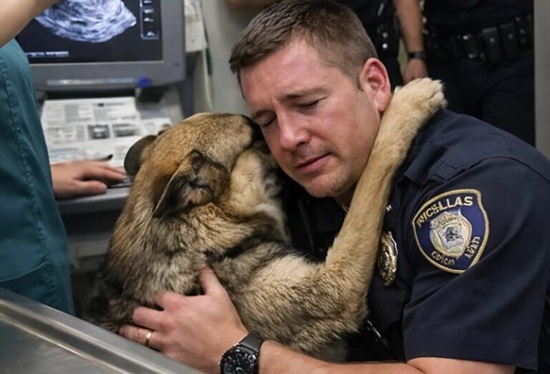
Despite his weakened condition, Rex slowly lifted his front paws and placed them around Alex’s shoulders in a gesture that resembled an embrace.
The movement required visible effort, and the room became completely silent as those present observed the unexpected interaction.
Alex responded by holding Rex gently, visibly emotional as he tried to comfort the dog during what was believed to be his final moments.
The veterinarian, however, paused and observed the situation closely, sensing that something about Rex’s condition might require further review.
She requested a brief delay in the procedure and decided to perform an additional examination before proceeding further.
Using ultrasound equipment, she carefully re-evaluated Rex’s internal condition, focusing on the areas previously identified during the initial assessment.
As she reviewed the imaging results, her attention became concentrated on a specific area that appeared unusual compared to typical organ failure patterns.
After further analysis, she instructed her assistant to adjust the imaging settings and re-examine the affected region in greater detail.
The updated scan revealed an unexpected finding that did not align with the initial diagnosis of organ failure alone.
The veterinarian identified what appeared to be a small foreign object that could be affecting internal functions and contributing to the symptoms.
She explained that the presence of such a fragment could cause significant complications depending on its location and duration within the body.
This discovery changed the interpretation of Rex’s condition and required immediate reassessment of possible treatment options.
Instead of a confirmed terminal condition, the situation now suggested that surgical intervention might offer a chance for recovery.
Alex listened carefully as the veterinarian explained that if the object could be safely removed, there was a possibility for improvement.
The officers in the room reacted with cautious hope, understanding that the situation had shifted from end-of-life care to potential emergency treatment.
The veterinary team immediately began preparing for surgical intervention, recognizing that time would be an important factor in Rex’s recovery.
Alex remained beside Rex, continuing to provide comfort while the medical staff prepared the necessary equipment for the procedure.
Despite the uncertainty, the mood in the room shifted from grief to cautious optimism as preparations progressed.
Rex remained close to Alex, maintaining physical contact as the team worked around them to stabilize and prepare for surgery.
For those present, the situation demonstrated how quickly medical assessments can change with further investigation and detailed imaging.
The bond between Alex and Rex remained evident throughout the process, reflecting years of trust built through shared service and experience.
As preparations continued, the veterinary team focused on precision and urgency, aiming to give Rex the best possible chance of recovery.
The officers quietly stepped aside to allow the medical staff to proceed, while remaining present to support their colleague.
The situation that had begun as a farewell had transformed into a potential recovery scenario within a short period of time.
Hope replaced the earlier sense of loss, as everyone involved focused on the possibility that Rex could survive with proper treatment.
Alex spoke softly to Rex, remaining by his side and offering reassurance as the dog prepared for surgery.
The veterinary team finalized preparations, ensuring that all necessary steps were taken to address the identified medical issue.
The story of Rex and Officer Alex Voronov highlights the strong bond often formed between service dogs and their handlers in demanding professional environments.
It also reflects how careful medical evaluation can sometimes reveal unexpected possibilities, even in critical situations.
What began as a moment of farewell turned into a renewed opportunity for treatment, demonstrating the importance of thorough diagnosis and continued assessment.
For everyone present in the clinic, the experience became a powerful reminder of trust, loyalty, and the connection between humans and service animals.