Funny pictures that need second loos!
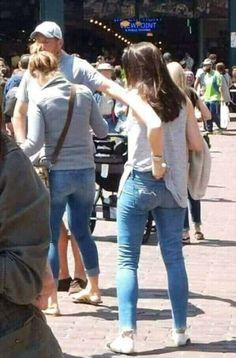
The human eye is a remarkable organ, capable of processing millions of bits of information per second, yet it is surprisingly easy to deceive. We navigate our world relying on the assumption that what we see is an absolute reflection of reality, but every so often, a photograph emerges that challenges this fundamental trust. These are the images that demand a second look—not because they are inherently complex, but because they capture a momentary glitch in our perception. They sit at the intersection of perfect timing, accidental perspective, and the brain’s desperate attempt to make sense of the nonsensical. When we look at a “funny” or “curious” picture, we aren’t just looking at a digital file; we are engaging in a psychological tug-of-war between what is actually there and what our mind insists must be there.
At the heart of this phenomenon is a concept known as pareidolia. This is the psychological tendency for the human brain to perceive a specific, often meaningful image in a random or ambiguous visual pattern. It is the reason we see faces in the charred crust of a piece of toast, or why a knot in a wooden fence suddenly looks like a screaming ghost. Our ancestors relied on this rapid pattern recognition for survival; it was better to mistake a bush for a bear than to mistake a bear for a bush. In the modern era, this evolutionary leftover manifests as a source of endless digital entertainment. A simple shadow cast by a garden hose might, at a specific angle, look exactly like a coiled cobra, sending a jolt of adrenaline through the viewer until the brain catches up and realizes the mundane truth.
Perspective is the primary architect of these visual riddles. The world is three-dimensional, but a photograph is a flat, two-dimensional plane. When the camera lens flattens depth, objects that are far apart can appear to be touching or merging. This creates the classic “forced perspective” shots that populate the internet. You might see a tourist who appears to be leaning against the Leaning Tower of Pisa, supporting its weight with a single hand, or a dog that seems to have a human torso because its owner is sitting directly behind it at just the right angle. These images are jarring because they violate the laws of physics that we understand intuitively. We know a dog cannot have human arms, yet the visual evidence presented to our retinas says otherwise. The delight comes from the “click” moment—the second when the eyes adjust, the depth perception resets, and the mystery is solved.
Timing is the second crucial ingredient in the recipe for a bewildering image. There is a “decisive moment,” as famed photographer Henri Cartier-Bresson called it, where the elements of a scene align in a way that will never happen again. This could be a splash of water that takes the shape of a leaping horse for a fraction of a second, or a bird flying across the sun in such a way that it appears to be carrying the fireball in its beak. These photos are often accidental masterpieces. They capture the chaos of the universe momentarily masquerading as order. Because we live in a world of constant motion, seeing a frozen slice of time that suggests something impossible—like a person “walking” on water due to the surface tension and a fast shutter speed—forces us to pause. We are seeing something the naked eye can barely register in real-time, and that stillness creates a sense of wonder.
Beyond the humor and the “tricks” of the eye, these images tap into a deeper sense of mystery. They remind us that our perspective is limited. We often walk through our daily lives on autopilot, ignoring the mundane details of our environment. A photograph that requires a second look acts as a cognitive speed bump. It forces us to slow down and actually observe. We begin to notice the way light refracts through a glass of water to create a miniature rainbow on the table, or how the reflection in a shop window creates a surreal collage of the street behind us and the mannequins inside. These moments of visual confusion are, in a way, a gift of mindfulness. They pull us out of our internal monologues and back into the physical world, demanding that we solve the puzzle presented to us.
The internet has transformed these individual moments of wonder into a shared cultural experience. We no longer just stumble upon a strange shadow in our own backyard; we share it with millions. This collective observation creates a fascinating dialogue. One person might see a terrifying monster in a blurry photo of a forest, while another sees a fallen log and a trick of the light. This highlights the subjectivity of human experience. What we see is heavily influenced by our expectations, our fears, and our cultural backgrounds. A “mysterious” light in the sky might be interpreted as a celestial omen by one culture, a secret government project by another, and a simple lens flare by a photographer. These images serve as a mirror, reflecting not just the world, but the internal state of the observer.
There is also a certain joy in being fooled. In a world where we are constantly bombarded with polished, high-definition imagery and AI-generated perfections, a grainy, accidental photo that makes us squint and tilt our heads feels authentic. It is a reminder of the messiness of reality. There is a specific kind of laughter that comes from realizing that what you thought was a giant spider on the wall is actually just a clump of dust caught in a cobweb. It is the laughter of relief and the acknowledgment of our own fallibility. We like to think we are masters of our environment, but these photos prove that we are easily distracted by a clever shadow or an odd angle.
Furthermore, these images often evoke a sense of the “uncanny”—that which is strangely familiar yet unsettling. When an object looks almost like something else but not quite, it creates a tension in the mind. A gnarled tree root that looks like a human hand reaching out of the earth is not just a funny picture; it is a brush with the gothic and the surreal. It reminds us of the ancient stories and myths that were likely born from similar visual misunderstandings. Before we had cameras to capture and deconstruct these moments, they were the stuff of legends. The “strange light in the sky” mentioned in the original text has been a staple of human storytelling for millennia, moving from folklore to science fiction as our understanding of the universe evolved.
Ultimately, the reason we are drawn to pictures that need a second look is because they satisfy a fundamental human curiosity. We are natural explorers and problem solvers. Each of these images is a tiny mystery waiting to be unraveled. They challenge our assumptions, entertain our imaginations, and remind us that there is always more to the world than meets the eye. Whether it is a dog that looks like it’s driving a car or a cloud that perfectly resembles a dragon, these visual anomalies brighten the mundane. They encourage us to look closer, to question what we see, and to appreciate the weird, wonderful, and often hilarious coincidences that occur when light, timing, and perspective collide on a single frame of film or a digital sensor. They are a testament to the fact that even in an age of total information, the world still has the power to surprise us.