Pete Hegseth Cites “Bible Verse” That Turns Out to Be From Pulp Fiction
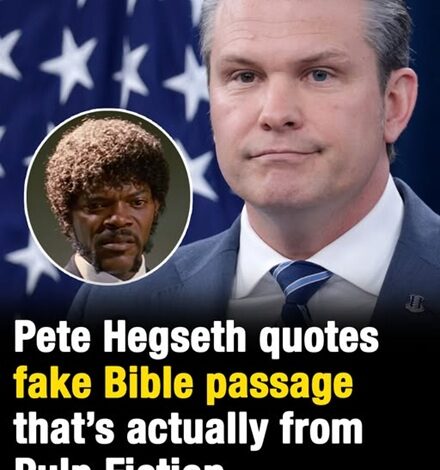
The controversy surrounding Pete Hegseth’s remarks quickly spread across political media and social platforms, drawing widespread attention from commentators, journalists, and online users.
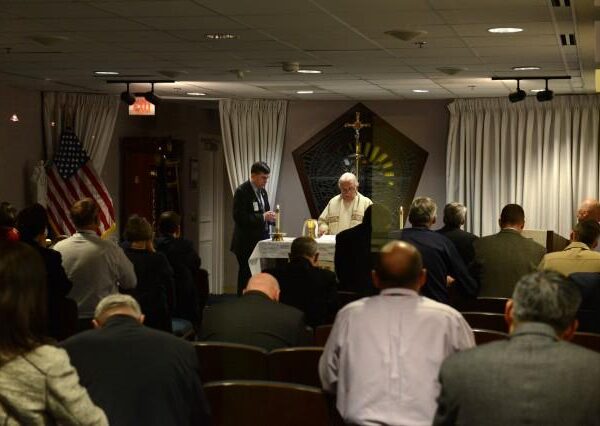
The discussion intensified within hours of the event. What initially began as a speech at a Pentagon prayer-related gathering soon developed into a broader public debate about accuracy, context, and the use of religious references in official government settings.
Many observers focused on the specific passage Hegseth recited, noting its strong resemblance to a well-known monologue from the 1994 film Pulp Fiction, rather than a direct biblical quotation.
The confusion centered on the fact that the film itself adapted language inspired by a biblical verse, which contributed to the overlapping wording and recognition among audiences familiar with both sources.
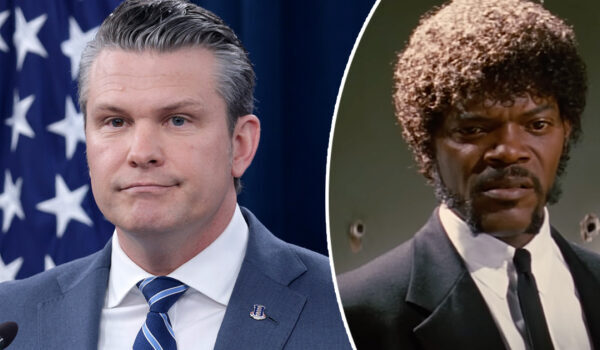
As clips of the speech circulated online, social media platforms became highly active, with users expressing surprise, criticism, and humor regarding the apparent mix-up during the official event.
Some users questioned how such a reference could be used in a formal setting, while others debated whether the wording was intentionally adapted or mistakenly attributed during delivery.
The incident quickly evolved beyond a simple quoting error, becoming part of a larger conversation about political messaging, religious language, and public communication within government institutions.
Commentators across different media outlets highlighted the importance of precision when referencing religious texts, especially in speeches delivered in official or ceremonial contexts.
The discussion also drew attention to the broader practice of incorporating faith-based language into political discourse, which has long been a feature of public life in the United States.
In this case, however, the overlap between cinematic dialogue and biblical phrasing created confusion that fueled widespread online discussion and interpretation.

As the story gained momentum, the Pentagon was prompted to issue an official response in order to clarify the context of the remarks made during the event.
Sean Parnell, serving as assistant to the secretary of war for public affairs and chief Pentagon spokesman, addressed the situation publicly through a statement on social media.
In his response, Parnell explained that the prayer referenced by Hegseth was part of a custom tradition used by certain military personnel involved in search and rescue operations.
He stated that the passage was connected to a prayer used by members of a specific mission unit, which itself was inspired by language found in Pulp Fiction.
According to the statement, both the prayer and the film dialogue were ultimately influenced by the biblical verse Ezekiel 25:17, which is often associated with themes of judgment and morality.
Parnell further emphasized that Hegseth had referenced this connection during his remarks at the event, suggesting that the origin of the wording was acknowledged in context.
The Pentagon spokesperson rejected claims that the secretary had simply misquoted scripture without awareness, describing such interpretations as inaccurate and misleading.
The official statement framed the criticism as a misunderstanding of the layered origins of the phrase, which includes religious text, cinematic adaptation, and modern reinterpretation.
Despite the clarification, public debate continued, with differing interpretations emerging across political commentators, media analysts, and social media users.
Some defended the explanation provided by the Pentagon, arguing that the reference was contextual and linked to a known cultural adaptation rather than a literal scriptural quotation.
Others remained critical, suggesting that the blending of religious text and fictional dialogue in an official setting created unnecessary confusion and raised questions about messaging accuracy.
The incident also became part of a wider pattern of politically charged discourse, where symbolic language and cultural references are frequently scrutinized in detail.
Over time, the intensity of the online reaction began to decrease, but the story continued to circulate within news commentary and political discussion segments.
Analysts noted that the controversy reflected the modern speed at which public statements can be interpreted, reinterpreted, and widely distributed within minutes of being made.
In the broader context, the event highlighted how cultural references, religious language, and political communication often intersect in unexpected ways in public life.
It also demonstrated how quickly a single line from a speech can evolve into a national talking point when amplified through digital platforms and media coverage.
As the situation settled, official responses from the Pentagon remained consistent, maintaining that the reference had been properly contextualized and not misrepresented.
The discussion gradually shifted away from the original remark and toward broader questions about political communication style and media interpretation.
In conclusion, the incident surrounding Pete Hegseth’s remarks became less about a single quotation and more about how language is understood in modern political environments.
What began as a speech at a Pentagon event ultimately developed into a widely discussed moment that combined religion, pop culture, and public perception.
While the Pentagon provided clarification regarding the origin and intent of the reference, public interpretation continued to vary across different audiences.
The story eventually settled into the broader cycle of political news, where brief controversies often spark intense discussion before gradually fading from the spotlight.
In the end, the episode served as another example of how quickly modern political statements can spread, evolve, and be debated in the digital age.