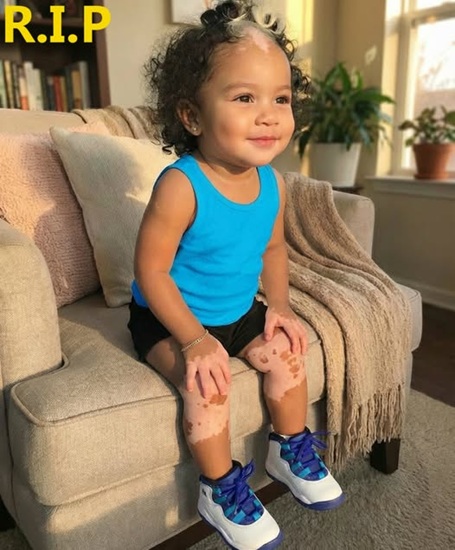
A Heartbreaking Loss: A Young Life Taken Too Soon

The sun hung gently in the sky when they stepped out of their home that afternoon, painting the quiet neighborhood in warm, golden light. Long shadows stretched lazily across the familiar trail, a place that had always felt safe, almost sacred in its stillness. For Michael, Sarah, and their young son Daniel, it was more than just a path through the woods—it was a ritual, a shared escape where laughter echoed between the trees and time seemed to slow down.
Nothing about that day suggested it would be any different from the countless peaceful walks they had taken before. As the hours passed, the light began to fade, and with it came a shift no one could have predicted. What started as an ordinary outing slowly unraveled into something unthinkable. The calm of the forest was replaced by chaos—sirens cutting through the evening air, urgent voices overlapping in confusion, and the unmistakable sound of panic.
In a moment that felt both instant and endless, everything changed. A father’s voice, filled with fear and desperation, called out his son’s name again and again, carried helplessly into the cold wind. By nightfall, the sense of normalcy that once defined their lives had been completely shattered.
The small town of Maple Ridge, a place where life moved quietly and predictably, was suddenly confronted with a loss that felt impossible to comprehend. Tragedy had always seemed distant, something that belonged to headlines and faraway places. Now, it had arrived without warning, settling heavily over the community and leaving behind a silence more powerful than any noise.
In the days that followed, that silence became a shared experience. The town slowed, as though time itself had taken on a different rhythm. Conversations grew softer, movements more deliberate, and even the simplest routines carried a weight they had never held before. People who once lived side by side with polite distance now found themselves drawn together by something deeper. Grief, in its rawest form, erased boundaries and replaced them with quiet understanding.
Neighbors began to gather not out of obligation, but out of instinct. There were no perfect words to offer Michael and Sarah, no sentences capable of easing the depth of their pain. Instead, there were gentle embraces, lingering حضور, and the kind of silence that speaks more than language ever could. It was in these small, human moments that the community began to find its strength—not by trying to fix the unfixable, but by simply being present.
The nature trail, once alive with the carefree energy of a child’s footsteps, slowly transformed into something entirely different. It became a place of remembrance, marked by flickering candlelight and small tokens left behind by those who cared. Soft toys, handwritten notes, and flowers appeared along the path, each one carrying a piece of collective sorrow and love. At dusk, the trail glowed softly, as if the community itself was trying to hold onto something that could not be kept.
For Michael, returning to that place was both painful and necessary. Each step along the trail carried memories that felt almost too heavy to bear, yet he found himself drawn back again and again. In his hands, he often held the camera that had captured so many ordinary, beautiful moments of their lives together. It had become more than just an object—it was a fragile connection to a time before everything changed.
Late one evening, standing beneath the fading light, he scrolled through the images stored within it. Each photograph told a story, but one in particular held him still. It was the last picture he had taken of Daniel. In it, his son stood with his arms wide open, a radiant smile stretching across his face as he looked up at the towering trees around him. There was a sense of wonder in that image, a pure, unfiltered joy that seemed untouched by anything beyond that moment.
That photograph became something the family held onto with quiet intensity. In the stillness of the night, when the world outside seemed to pause, it was not the memory of loss that filled their thoughts, but that single, perfect image. It allowed them to remember Daniel not in the context of tragedy, but as he truly was—full of life, curiosity, and light. It became a way of preserving his spirit in its most authentic form.
Grief, however, does not follow a clear path. It moves unpredictably, rising and falling like an ocean without boundaries. For Michael and Sarah, each day brought a different wave—some gentle, others overwhelming. Yet within that vast uncertainty, there was also something steady: the presence of a community that refused to let them face it alone. The support surrounding them did not erase the pain, but it made it possible to carry.
Maple Ridge itself began to change in subtle but meaningful ways. People who had once lived parallel lives now shared something deeply connective. The loss of one small boy had reshaped the emotional landscape of the entire town, reminding everyone of the fragility and value of life. In honoring Daniel, they were also rediscovering what it meant to truly see one another.
There was no formal declaration, no single moment that defined it, but a quiet understanding took hold among the residents. They would remember. Not just the tragedy, but the life that came before it—the laughter on the trail, the small footprints in the dirt, the joy that once filled those woods. Memory became an act of care, a way of ensuring that Daniel’s presence would not fade with time.
In the shared sorrow, something profound emerged. It was not hope in the traditional sense, nor was it closure. Instead, it was a deep, collective dignity—a recognition of love in its most enduring form. Even in absence, Daniel’s life continued to shape the people around him, leaving behind a legacy far greater than anyone could have imagined.
And so, as the seasons begin to shift and the trail slowly returns to its quiet rhythm, there remains a gentle, unspoken promise within Maple Ridge. The boy who once ran freely beneath those trees will not be forgotten. His story lives on not only in memory, but in the way a community learned to come together, to grieve, and to honor a life that, though brief, was deeply and truly loved.