Last surviving member of the Ronettes dies aged 80
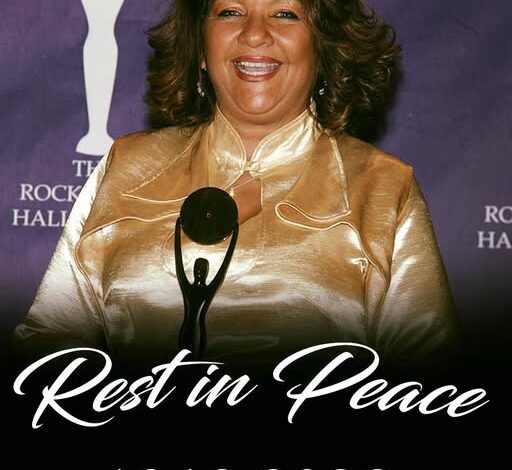
Nedra Talley Ross died peacefully in her own bed, in a quiet moment far removed from the noise and brightness that once defined her life. There were no flashing lights, no stage, no audience—only stillness, familiarity, and the presence of those who loved her. It was a gentle ending, the kind that contrasts sharply with the energy of the world she once belonged to. And then, just minutes later, her daughter’s words—simple, raw, and filled with emotion—began to travel outward, reaching people across the world and turning that quiet moment into something widely felt.
For many, the news carried a deeper meaning. She was not just an individual figure, but part of something larger—a voice from an era that shaped music in a way that still resonates today. With her passing, a chapter closes more completely. The final connection to a specific time, a specific sound, feels more distant now. And yet, what stands out just as much as her musical legacy is the path she chose afterward—a direction that moved away from the spotlight rather than toward it.
There was a time when she was at the center of a cultural moment that felt larger than life. Alongside The Ronettes, she helped create a sound that was unmistakable—layered harmonies, bold style, and a presence that captured attention instantly. The image was just as powerful as the music: towering hair, defined lines of makeup, and an attitude that felt both confident and controlled. Their performances carried an energy that could hold a room still, drawing listeners into something that felt immediate and unforgettable.
But even at the height of that success, there were realities behind the scenes that were less visible. The demands of constant performance, the pressure to maintain a certain image, and the intensity of the industry created an environment that was not always sustainable. For someone living within it, the experience could shift from exciting to exhausting, from fulfilling to overwhelming.
At a point when many would have continued pushing forward, she made a different choice. She stepped away. Not gradually, not reluctantly, but with a sense of clarity about what she wanted her life to become. In an industry where visibility is often treated as essential, that decision stood out. It was a move away from constant attention and toward something more personal, more grounded.
Her focus shifted to areas that did not depend on public recognition. Faith became central, shaping how she understood her life beyond music. She explored Christian music, not as a continuation of fame, but as a different form of expression. She built a life with her husband, Scott Ross, raising four children and creating a family environment that offered stability and meaning in ways the industry could not.
Her work in real estate added another layer to that life—something practical, structured, and rooted in everyday interactions. It was a contrast to the unpredictability of performing, offering a different kind of fulfillment. These choices reflected a broader shift, one that moved away from performance as identity and toward a life defined by values, relationships, and consistency.
When news of her passing emerged, it did not come through formal channels or carefully prepared statements. Instead, it came through her daughter’s words—direct, heartfelt, and deeply personal. The message that she had “gone home to be with the Lord” carried meaning not just as a statement of belief, but as a reflection of the life she had chosen to live in her later years.
The response that followed came from many directions. Fans remembered the music, the energy, the way those songs had become part of their own lives. Others focused on the person she became after stepping away from that world—the choices she made, the path she followed, the consistency she maintained. It was not just a reaction to a public figure, but to a life that had moved through very different phases with intention.
Her passing also marks the end of something specific. With her gone, the original lineup of The Ronettes is no longer present in the way it once was. The group exists now through recordings, through history, through the lasting impact of what they created together. But the connection to that time feels more archival, more reflective, as those who lived it become part of memory.
And yet, that connection is not entirely lost. It continues in the music itself. When songs like “Be My Baby” are played, they carry with them more than sound. They bring back a sense of the moment in which they were created—the style, the emotion, the atmosphere that defined that era. In those moments, her voice is still present, still part of something that reaches beyond time.
Her story, then, is not defined by a single chapter. It includes both the intensity of her early success and the quiet strength of her later choices. It reflects not only what she contributed to music, but how she chose to live once that chapter had passed.
In the end, what remains is not just a legacy of sound, but a life shaped by decisions that moved beyond it.
A voice that helped define an era.
A path that stepped away from it.
And a story that continues, both in memory and in the music that still plays.