TRAGIC NEWS SHAKES NATION AS FORMER PRESIDENT GEORGE W BUSH STRUGGLES THROUGH DEBILITATING RECOVERY
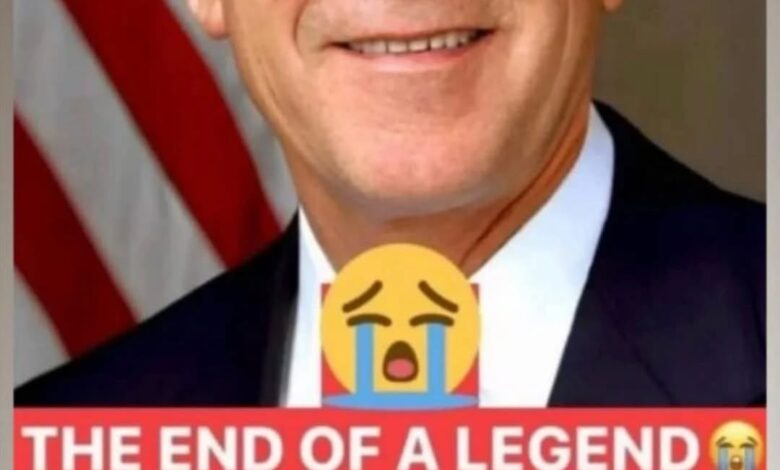
The atmosphere at the World Series is historically charged with a unique blend of national pride, athletic excellence, and the weight of tradition. When a former President of the United States steps onto the diamond to deliver the ceremonial first pitch, it is usually a moment of choreographed perfection, a symbolic bridge between the highest office in the land and the quintessential American pastime. However, when George W. Bush took the mound recently, the world witnessed something far more human and, for many, deeply concerning. What was supposed to be a routine display of presidential vigor instead became a viral moment that sparked a firestorm of speculation, concern, and eventually, a sobering look into the private physical battles of a man who has spent the better part of three decades in the unrelenting glare of the public spotlight.
For years, George W. Bush has been the embodiment of the active elder statesman. Whether he was mountain biking on his ranch in Crawford, Texas, or standing for hours at public events supporting veterans, his physical resilience seemed to be a cornerstone of his post-presidency identity. But as he wound up for that pitch, the fluid athleticism that fans remembered from his iconic 2001 World Series strike was absent. The ball didn’t fly with its usual zip; instead, it moved with a labored, awkward trajectory that veered sharply off course. In the age of social media, the reaction was instantaneous. Thousands of spectators and millions of viewers online began to wonder aloud if the former Commander-in-Chief was facing a serious, undisclosed health crisis. The “breaking news” headlines began to circulate, fueled by the visual evidence of a man who looked momentarily betrayed by his own body.
The silence surrounding the incident was eventually broken by his daughter, Jenna Bush Hager, who provided a heartfelt and necessary clarification that transformed the narrative from one of decline to one of quiet, gritty perseverance. She revealed that her father had recently undergone a significant and invasive lower back fusion surgery. This was not a minor outpatient procedure or a simple corrective measure; it was a major orthopedic intervention designed to stabilize the spine and alleviate the chronic, debilitating pain that had been mounting behind the scenes for years. For a man in his late 70s, spinal fusion is a grueling ordeal that requires months of intensive physical therapy and imposes strict limitations on even the most basic movements. The twisting motion required to throw a baseball—a motion most people take for granted—is one of the most taxing actions a recovery patient can attempt.
Jenna confessed that watching her father take the field filled her with a sense of immediate dread and profound empathy. She knew the reality of his daily struggle: the stiff mornings, the difficulty of finding a comfortable seated position, and the sheer mental fortitude required to keep moving when every nerve ending is screaming for rest. Seeing him attempt that pitch was, for her, a visual representation of his stubborn refusal to let physical frailty dictate his public life. He had spent months in a private cocoon of recovery, intentionally choosing not to broadcast his surgery or seek public sympathy. Bush has always belonged to a generation that views the airing of physical grievances as a sign of weakness, preferring to handle his health matters with a stoic, dignified privacy.
A formal confirmation from his spokesperson soon followed, grounding Jenna’s emotional account in medical fact. The surgery had been a success, but the recovery was described as “ongoing” and “arduous.” This detail changed the entire context of the “failed” pitch. Suddenly, the errant ball wasn’t a sign of aging or a lack of focus; it was a testament to a man showing up for a commitment despite being in the midst of a painful rehabilitation process. The public perception shifted from mockery to a shared sense of respect. Many who had criticized the pitch were forced to reckon with the reality that, at seventy-seven years old, simply walking to the center of a stadium after major spinal surgery is a feat of strength that most people would find impossible.
This incident serves as a poignant reminder of the universal reality of aging, a process that spares no one, regardless of their status or the power they once held. George W. Bush’s struggle is a microcosm of the human condition—the inevitable friction between a determined spirit and a biological clock that eventually slows down. In the years since leaving the White House, Bush has reinvented himself as a painter and a dedicated advocate for wounded warriors. His paintings of veterans often focus on the physical and invisible scars of service, a theme that now seems even more resonant as he navigates his own physical vulnerabilities. He continues to engage in public life, but the World Series pitch pulled back the curtain on the cost of that engagement.
Medical experts note that spinal fusion recovery is a marathon, not a sprint. The procedure involves permanently connecting two or more vertebrae in the spine to eliminate motion between them, which can drastically reduce flexibility. For a former president who prides himself on his vitality, the psychological impact of these physical boundaries can be just as challenging as the physical pain. Yet, as Jenna noted, her father’s mindset remains unshaken. He possesses a drive to “show up,” a sense of duty that often overrides his personal comfort. While this resilience is the very trait that led him to the highest office in the world, it also comes with inherent risks. Pushing the body too hard during a fusion recovery can lead to setbacks or even the failure of the surgical hardware, making his appearance on the mound a calculated risk driven by a desire to maintain a sense of normalcy and tradition.
The reaction from the American public mirrored the complex nature of the man himself. While the internet is often a place of quick judgments and harsh critiques, a wave of support emerged as the details of his surgery became known. Many people shared their own stories of back pain and the long road to recovery after similar surgeries, finding a rare moment of relatability with a former world leader. The story stopped being about a baseball game and started being about the grit required to age with dignity in the public eye. It became a lesson in empathy, reminding us that we never truly know the invisible burdens others are carrying, even those who seem to have everything.
In the end, that curved, off-target pitch at the World Series will likely be remembered more than a perfect strike would have been. It stands as a symbol of human imperfection and the beauty of trying anyway. It reflected a resilience that is far more profound than athletic skill—the resilience to face the world when you are not at your best, to accept your limitations without losing your spirit, and to understand that “showing up” is often the most courageous thing a person can do. George W. Bush’s journey through surgery and recovery is a reminder that while the body may falter, the will to participate in the world remains a powerful, defining force of the human experience.