From Orphaned Street Legend to Global Icon How This Newark Survivor Redefined Hollywood and Hip Hop Forever
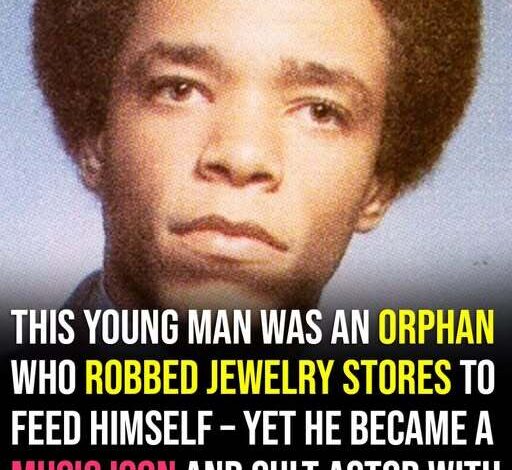
The legend of Tracy Lauren Marrow originated in the icy, concrete reality of Newark, New Jersey, in the late 1950s and early 1960s, which was never intended to be a breeding ground for international icons. He was only a little lad navigating a society that appeared intent on robbing him of everything long before everyone would chant his name. His life story is one of the most poignant illustrations of the American Phoenix—a tale of a young man who rose from the ashes as a cultural pioneer after being consumed by the flames of institutional poverty, personal tragedy, and criminal temptation.
During his early years, tragedy struck with a surgical, brutal precision. Tracy was facing death’s finality while most kids were preoccupied with schoolyard activities. When he was just in the third grade, his mother passed away from a heart attack. His father died from the same illness a few years later, when he was still struggling with the emptiness caused by her absence. The Newark youngster became an orphan by the time he was twelve. This combined blow took away his sense of security in addition to his emotional pillars. He was relocated from the East Coast to the center of a growing West Coast subculture characterized by gang lines and survivalist mindsets when he was transferred to live with an aunt in South Los Angeles.
Racial tensions, poverty, and deteriorating infrastructure were all prevalent in Los Angeles. His classroom was the streets of South Central and Crenshaw. He was at a crossroads as a student at Crenshaw High School, where the urgent need for resources masked the way to “normalcy.” Here, the combination of economic desperation and racism started to mold his worldview. He slipped into the shadows of illicit activity in order to survive. He was more than simply a bystander to the mayhem; he was an active participant in a society where little infractions were frequently the only way to end hunger and obtain food.
But even in the depths of street life, Tracy had a unique quality: a rigid, uncompromising personal code. He maintained a remarkable level of discipline while his peers descended into the growing drug pandemic that would soon wreak havoc on the neighborhood. He notably abstained from alcohol and narcotics because he wanted complete control over his body and thoughts. Early on, he understood that his internal discipline was his only genuine weapon in a world when everything else was chaos. He was analyzing the game with an ambitious eye, searching for a way out that did not require a coffin or a life sentence, rather than only trying to live.
He joined the US Army in an attempt to take control of his life and get away from the harshness of the streets. The military gave him the structure he had been lacking since infancy for four years. During this period, he started to cultivate a profound, technical passion for music and bought his first set of turntables. However, the lack of imminent chance dragged him back into the shadows after his duty ended and he returned to civilian life. He became embroiled in high-stakes criminal operations, such as street hustling and jewelry theft. The possibility of long-term incarceration loomed over every choice during this turbulent time, when the distinction between life and death was extremely thin.
Tracy’s realization that his greatest intellectual property was actually his lived experience marked a turning point in his life. He began writing about the harsh reality he encountered on a daily basis using his gift for poetry. He started creating a new genre under the name Ice-T, paying tribute to the author and street poet Iceberg Slim. He was reporting, not just rhyming. Using the microphone as a storytelling tool, he transformed the systematic pressure, the brutality, and the icy street observations into a rhythmic narrative. This marked the beginning of the “Gangsta Rap” phenomenon, which would ultimately transform the music business worldwide. He forced the world to examine the communities it had made such an effort to overlook by using the pain of his childhood as a mirror for society.
The business started to notice his innate charisma and unquestionable on-screen presence as his music career took off. Making the switch to acting was an evolution rather than merely a career decision. No drama school could impart the realism he brought to his characters. His performances were influenced by the wounds he carried from his time in Newark and Los Angeles, whether he was portraying a gritty survivor or a high-stakes covert agent. This ultimately resulted in his remarkable television career, where he became one of the most well-known and enduring characters in procedural history. He was able to successfully transition from being a street voice to a mainstay in American homes.
The domestic stability he worked so hard to attain is arguably the most remarkable aspect of his trip. Building a long-lasting home was the ultimate triumph for a man who lost his family at a young age. He changed from a man who vacillated between family members to a loving spouse and parent who gives him the stability he was denied. He made the deliberate, controlled decision to turn away from the life of crime and toward artistic expression.
His legacy is now a master lesson in redirection. It is evidence that your starting point need not be where you end up. In addition to saving his own life, he established a model for future generations of artists by using the raw ingredients of a difficult upbringing—poverty, criminality, and loss—and honing them via the prism of art and discipline. He continues to serve as a living example of how a bright intellect and an unwavering work ethic can triumph over the most formidable obstacles, demonstrating that a young man from Newark’s streets can, in fact, rise to become a global monarch.