The Dark Truth About Country Music Legend David Allan Coe Revealed As He Passes Away At 86
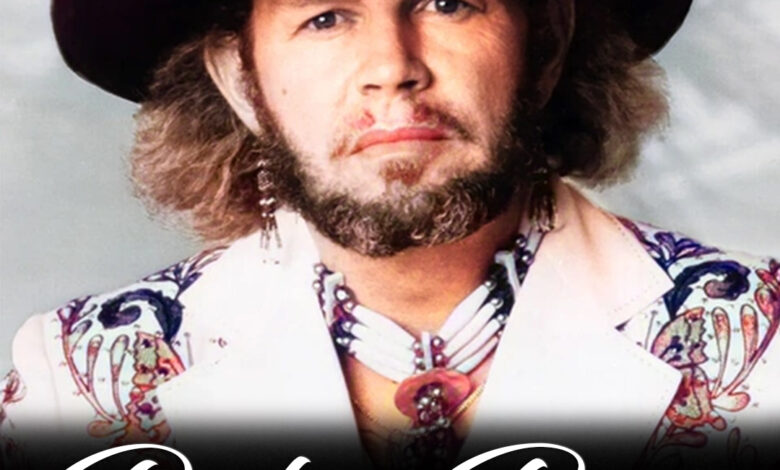
The country music community and fans around the world are mourning the loss of one of the most polarizing and distinctive voices in the history of the genre. David Allan Coe, a trailblazing artist who reshaped the boundaries of traditional music and steadfastly refused to bow down to the polished norms of Nashville, has died at the age of 86. His passing was officially confirmed on April 29, though no specific cause of death was immediately disclosed by his representatives. For millions of loyal fans, this heartbreaking news closes an extraordinary and turbulent chapter on a career that almost single-handedly helped forge the rebellious, gritty edge of the outlaw country movement during the pivotal years of the 1970s.
A Troubled Beginning and An Outlaw Identity
Born on September 6, 1939, in the industrial city of Akron, Ohio, Coe did not follow the traditional, family-friendly path of most country stars of his generation. His early life was characterized by profound turbulence and struggle, which ultimately led him to spend significant portions of his youth in various correctional facilities. These formative and challenging experiences were not just a distant footnote in his past; they became the very foundation of his songwriting and the lifeblood of his fiercely independent public persona. By embracing an authentic outsider identity, Coe carved out a unique space that set him apart in a music genre often rooted in conventionalism and mainstream respectability.
The Nashville Climb
When he finally arrived in Nashville in 1967 with a guitar and a dream, success was far from immediate. Coe had to fight relentlessly for every inch of recognition. Like many visionary artists of his era, he built his formidable reputation gradually, working initially behind the scenes as a talented and observant songwriter. His major breakthrough arrived in 1973 when the legendary Tanya Tucker recorded his powerful composition Would You Lay With Me In a Field of Stone. The track soared to the number one spot, proving that Coe had an unparalleled talent for storytelling that resonated deeply with the masses. This monumental success kicked open the heavy doors to a major recording contract and a massive, diverse audience.
Stepping Into the Spotlight
By 1974, Coe was no longer content to remain behind the scenes and stepped directly into the spotlight with his debut album, The Mysterious Rhinestone Cowboy. It was a bold and unapologetic introduction that showcased his raw talent and unconventional charisma. Just a year later, in 1975, he released the critically acclaimed album Once Upon a Rhyme. This project featured what would ultimately become his most iconic and recognizable anthem, You Never Even Called Me by My Name. The track was a masterful blend of humor, deep self-awareness, and classic storytelling, famously referring to itself within the lyrics as the perfect country and western song.
Crafting Anthems and Finding His Voice
Coe possessed an instantly recognizable vocal style that combined elements of traditional country, raw blues, and southern rock. All of this was delivered through a deep, raspy baritone that commanded the listener’s full attention. Tracks like Longhaired Redneck and Willie, Waylon and Me further cemented his status as one of the genre’s most unconventional voices. His influence extended well beyond his own discography. He penned the legendary anthem Take This Job and Shove It, which became a massive, career-defining hit for Johnny Paycheck. The song evolved into an enduring cultural anthem, perfectly capturing the deep frustration and exhaustion of the American working class.
Commercial Success and Enduring Longevity
Although the 1970s represented the absolute peak of his commercial dominance, Coe proved that his talent possessed remarkable longevity. He refused to fade into obscurity as the musical landscape shifted toward pop-country in the 1980s. His 1983 album Castles in the Sand marked a phenomenal return to the spotlight. The album featured the powerful and haunting track The Ride, which resonated intensely with fans and critics alike, demonstrating that his storytelling abilities had not diminished over the years and reinforcing his deep, enduring appeal.
The Controversies and the Cost of Rebellion
Despite his undeniable musical genius, Coe carried a legacy that was never straightforward. He faced heavy criticism and public backlash for controversial material released in albums such as Nothing Sacred in 1978 and the Underground Album in 1982. These projects contained highly explicit and offensive language, creating a wave of condemnation that followed him for the rest of his life. While Coe and his defenders argued that the material was purely satirical or exaggerated for shock value, many listeners and critics remained deeply unconvinced, permanently staining his reputation in the mainstream media eye.
Legal Troubles and Personal Battles
The controversies did not stop with his controversial lyrics. Legal issues also surfaced during the later chapters of his life. In the year 2015, Coe pleaded guilty to obstructing IRS laws, a scandal that brought his personal finances and integrity into question. He was subsequently sentenced to probation and hit with a substantial financial penalty for unpaid taxes, a stark reminder of the tumultuous life he lived both on and off the stage.
Personal Life and Final Years
Even in the face of legal and personal turmoil, Coe refused to stop making music. He continued to perform and record well into his later years, maintaining a fiercely loyal fan base that appreciated his raw, unfiltered approach to the realities of American life. On a personal level, he found a measure of stability when he married Kimberly Hastings in 2010. He is survived by his loving wife and his children, who continue to carry his complex memory forward.
Conclusion
David Allan Coe leaves behind a legacy of contradictions. He was a country music pioneer, a brilliant songwriter, and a true outlaw who challenged the polished norms of Nashville. Yet, he was also a figure marked by intense controversy and personal battles. Ultimately, his life was a testament to the idea that true art does not always have to be polite. He lived life on his own terms, and his music will continue to influence generations of artists who refuse to fit neatly into predefined expectations.