The Disturbing 1965 Broadcast That Predicted Our Modern Nightmare
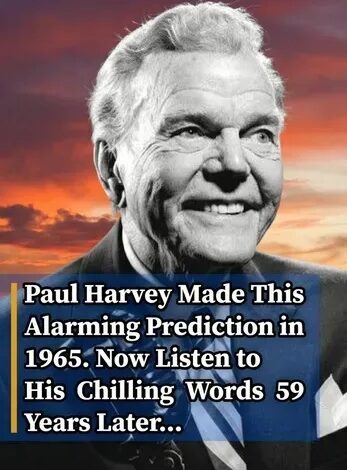
A calm, measured voice once cut through the evening static of a 1965 radio broadcast, quietly igniting a cultural time bomb that continues to tick today. In an era defined by postwar optimism and the rise of the modern consumer economy, a famed American commentator painted a profoundly disturbing picture of the future. He described a society twisted and ultimately broken by the pursuit of absolute comfort, endless distraction, and a steady, almost imperceptible moral drift. At the time, his dark predictions sounded like the wild exaggerations of a science fiction novel. The public listened, perhaps feeling a momentary pang of unease, before returning to their comfortable lives. Yet, decades later, millions of people swear that he was not spinning fiction but rather writing a precise historical record of the modern world we inhabit today. His profound words regarding family structures, the influence of mass media, and the rapid erosion of traditional values now feel absolutely prophetic.
What makes this 1965 monologue endure with such startling relevance is that it did far more than simply lament the passing of time or complain about the younger generation. The broadcaster actively challenged his listeners to open their eyes and recognize the incredibly slow, almost invisible speed at which a civilization can lose its moral bearings. He carefully framed cultural decay not as a sudden, dramatic collapse brought on by war or catastrophe, but as a series of small, seemingly insignificant compromises. Each of these compromises was justified by the individual making them, and each was viewed as completely harmless at the time.
The speaker detailed how the foundations of society do not crumble overnight. Rather, the bonds of family slowly loosen as people prioritize work and personal leisure over connection. Trusted institutions lose their credibility as they slowly bow to the pressures of popularity and profit. Meaningful reflection and critical thought are steadily replaced by mindless, rapid entertainment designed merely to numb the mind rather than challenge it. These changes do not happen in one decisive, headline-grabbing moment. Instead, they occur over years of slow distraction, complacency, and cultural drift, leaving a society that barely recognizes itself by the time it reaches the end of the road.
When we look around at the society of 2026, the parallels are impossible to ignore. We live in an age characterized by unprecedented technological connection, yet we are arguably more isolated than ever before. The media we consume is designed to capture our attention through outrage and endless scrolling, replacing deep interpersonal conversations with brief, digital interactions. The institutions that once held communities together are frequently questioned or outright dismissed. The pursuit of personal comfort has become the ultimate goal, often overriding our obligations to the broader community or the future of the planet. The commentator’s vision of a society drowning in distraction but starving for meaning has become our everyday reality.
Despite the seemingly bleak nature of his predictions, the underlying message of the 1965 broadcast was never one of total resignation or despair. The commentator was not suggesting that the future was set in stone or that humanity was doomed to fall. On the contrary, he argued passionately that awareness is a potent form of power. By simply recognizing the drift, individuals can begin to question what they consume, rebuild and strengthen their local communities, and actively choose responsibility over lazy indifference.
This perspective places the power squarely back into the hands of ordinary people. Whether one agrees with the commentator’s specific moral framework or political ideology, the core of his broadcast still presses an incredibly uncomfortable question upon every single generation that hears it. It demands to know whether we are actively shaping the culture that surrounds us, or if we are simply quietly surrendering to the currents of the modern world. The enduring and haunting relevance of his words suggests that the answer is never truly final, and it is certainly never someone else’s job to figure out.
The legacy of that 1965 broadcast is a powerful reminder that history is made by the small, everyday choices we make when no one is watching. It urges us to wake up from the comfortable stupor of modern life and examine the direction in which we are heading. As we navigate the complexities of the present and look toward an uncertain future, the voice from the past remains a guiding light, calling us back to the values of connection, responsibility, and deliberate living.