Are there any risks to sleeping on your right side? Here’s what you should know.
Sleep is one of the most essential biological processes for human health, yet the way we sleep is often overlooked. While many people focus on how many hours they sleep, fewer consider how their sleeping position might influence comfort, breathing patterns, digestion, and overall rest quality. However, sleep science shows that there is no universally “perfect” position that works for every individual. Instead, the effectiveness of a sleep posture depends on the body’s structure, health conditions, and personal comfort.
Each sleeping position interacts differently with the body’s internal systems. Gravity affects circulation, muscle relaxation, and even airway alignment depending on whether a person sleeps on their side, back, or stomach. Because of this, sleep posture is less about strict rules and more about how the body responds over time. Understanding these differences can help individuals make small adjustments that improve sleep quality without forcing a one-size-fits-all approach.
Left Side Sleeping and Its Common Associations
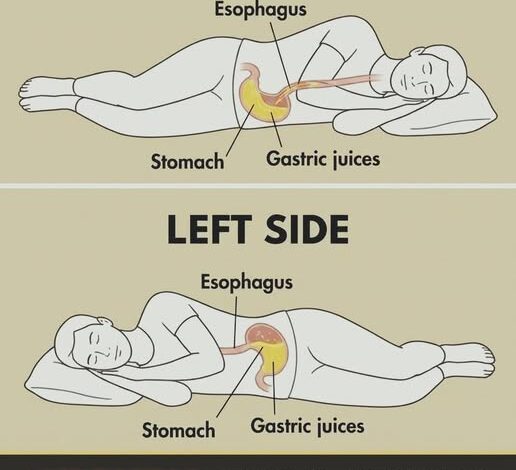
Sleeping on the left side is often discussed in relation to digestion and comfort after meals. In this position, the stomach and intestines are positioned in a way that may support natural digestive movement due to gravity. Some individuals report feeling less bloating or discomfort when resting on their left side, especially after eating late in the evening.
From a physiological perspective, side sleeping can also reduce pressure on the spine when properly supported. A pillow between the knees helps maintain hip alignment, while a supportive pillow for the head can keep the neck in a neutral position. These adjustments reduce strain on muscles and joints during the night.
However, left-side sleeping is not universally ideal. Some people may experience shoulder pressure, arm numbness, or discomfort if they remain on one side for too long. In such cases, alternating positions during the night can help distribute pressure more evenly and improve overall comfort.
Right Side Sleeping and Individual Comfort Differences
Right-side sleeping is often considered just as natural and beneficial as left-side sleeping. For many individuals, it provides a sense of comfort and balance, especially if they feel pressure or discomfort on the opposite side. The body’s musculoskeletal system does not inherently favor one side for all people, making personal preference an important factor.
Some individuals find that sleeping on the right side reduces strain on certain areas of the body, depending on their posture during the day or pre-existing physical conditions. Comfort is highly subjective, and what feels supportive for one person may feel restrictive for another.
The most important factor in side sleeping is not the direction itself but the alignment of the spine, neck, and hips. If these areas remain supported and relaxed, both right and left side sleeping can contribute to restorative rest.
Back Sleeping and Spinal Alignment
Sleeping on the back is often associated with maintaining spinal neutrality. When the head, neck, and spine are properly supported, this position can help reduce unnecessary twisting or bending of the body during sleep. Many sleep specialists consider back sleeping beneficial for alignment when it does not cause discomfort.
However, back sleeping is not suitable for everyone. Some individuals may experience increased snoring or mild breathing disruptions in this position due to airway positioning. Others may find it difficult to relax fully, especially if they are not accustomed to lying flat on their back.
Support plays a critical role in making back sleeping comfortable. A pillow that supports the natural curve of the neck and a mattress that distributes body weight evenly can significantly improve sleep quality in this position.
Why Sleep Position Alone Does Not Define Sleep Quality
While sleep position can influence comfort and physical sensations, it is only one factor among many that determine sleep quality. Sleep environment, stress levels, daily habits, and overall health all play significant roles. Even the best sleeping posture cannot fully compensate for poor sleep hygiene or irregular sleep schedules.
The body also naturally shifts positions throughout the night. Most people do not remain in a single position for the entire duration of sleep. These natural movements help reduce pressure points and improve circulation, making sleep posture more dynamic than static.
Because of this, focusing too heavily on a single “perfect” position can be misleading. A more effective approach is to identify what feels consistently comfortable and allows uninterrupted rest.
How to Recognize Your Ideal Sleeping Position
Instead of following rigid recommendations, it is more practical to observe how your body responds after sleep. Key indicators include how you feel when waking up and whether you experience stiffness, soreness, or fatigue.
If you consistently wake up feeling refreshed and free of discomfort, your current sleep position is likely suitable for your body. On the other hand, frequent stiffness, shoulder pain, or restless sleep may suggest that adjustments are needed in either position or support level.
Paying attention to sleep quality patterns over time provides more reliable insight than general advice alone. The body often communicates clearly through comfort and discomfort signals.
The Role of Supportive Sleep Environment
Sleep posture is closely connected to external support systems such as mattresses, pillows, and bedding quality. A well-designed sleep environment can improve comfort regardless of position. For example, side sleepers often benefit from placing a pillow between the knees to reduce hip strain, while back sleepers may require additional neck support.
Mattress firmness also plays a key role. A mattress that is too soft may cause misalignment, while one that is too firm may create pressure points. The goal is to maintain a balanced level of support that allows the spine to remain naturally aligned.
Temperature and room conditions also influence sleep quality. A cool, quiet, and dark environment enhances relaxation and makes it easier for the body to maintain restful sleep positions throughout the night.
The Bottom Line on Sleep Positions
There is no scientifically universal “best” sleep position that applies to every individual. Left side, right side, and back sleeping can all be effective depending on personal comfort, body structure, and health considerations.
The most reliable approach is not to strictly follow rules but to observe how your body responds over time. Small adjustments in pillow placement, mattress support, and sleeping habits often make a greater difference than switching positions entirely.
Ultimately, good sleep is not defined by position alone. It is defined by comfort, consistency, and the ability of the body to fully relax and recover during the night. When those conditions are met, the specific sleeping position becomes less important than the quality of rest achieved.