The Tragic Truth Behind The Final Days Of Music Legend Alan Osmond Revealed
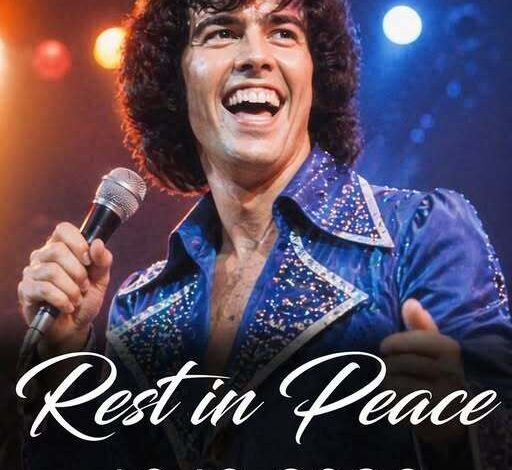
The entertainment industry was hit by the news of his departure like a quick, unexpected bolt of lightning, creating a deep void that is nearly impossible to ever fully fill. At the age of 76, Alan Osmond, the oldest brother and the calm, steady architect behind the recognizable grins and smooth harmonies that characterized an entire generation, passed suddenly. He passed away surrounded by the people he loved most, but the heartbeat of one of the most illustrious musical dynasties in history has finally stopped. The real story of how Alan kept an entire family enterprise together is still one of unmatched resiliency, unspoken suffering, and steadfast faith, even if the world remembers the brilliant lights, the yelling fans, and the number-one hits.
Alan Osmond was born into a big, musical family in Ogden, Utah, and assumed leadership roles practically as soon as he could play the guitar. He was thrown into the spotlight at a very young age because he was the oldest of the nine siblings. Alan began playing in the Osmond Brothers quartet with his brothers Virl, Tom, Wayne, and Merrill. What started off as a means of helping his deaf brothers soon became a worldwide phenomenon. The group attracted Andy Williams’ attention under Alan’s direction, and their television program served as the catalyst for their quick ascent to global fame.
However, stardom was not without its difficulties. A remarkable degree of self-control and sacrifice was required to reach the dizzying heights of international fame. There was a great deal of pressure behind the wholesome image that the public loved and the colorful, well-choreographed performances. A large portion of this load fell on Alan. In addition to being the arranger and guitarist who created their distinctive sound, he also served as a guardian for his younger siblings, Donny and Marie, who would go on to have enormous success of their own. Despite the turbulent maelstrom of the music industry in the 1970s, he made sure the group stayed focused, grounded, and cohesive.
Millions of people fell in love with the Osmonds because to popular albums like One Bad Apple and the rock-infused Crazy Horses. However, as the band performed in sold-out arenas across continents, Alan was engaged in a quiet, intimate struggle that few people outside his immediate circle truly comprehended. His diagnosis of multiple sclerosis, a crippling neurological condition that gradually damages the central nervous system, was made public years later.
Alan concealed his diagnosis for a considerable amount of time. He was afraid that the announcement would ruin the family’s career and cloud the happiness they offered to their admirers. Despite the physical discomfort and numbness that threatened to overtake him, he bravely proceeded to lead his brothers on stage, perform, and dance. He refused to allow his disease control his life or his audience’s delight, treating the stage as a haven.
His character was characterized by this resilience. Alan moved into a new role behind the scenes when his physical symptoms become too bad to ignore and he was unable to perform on stage with the same energy. He developed become the Osmond clan’s spiritual pillar, mentor, and producer. He focused on running the family company, composing music, and mentoring the upcoming generation of artists, including his own kids, who went on to become the Osmond Boys.
Alan’s faith remained an unwavering pillar throughout his life. He frequently talked about how his religious convictions gave him the fortitude to get through the most difficult periods of his career and the worst days of his sickness. His religion enabled him to see his difficulties as a test of character and a source of purpose rather than as a burden. He felt that his life was a gift that should be given to others via kindness and service rather than being his own.
Millions of albums sold globally, gold records, and television specials are not the only indicators of his legacy. The lives he impacted, the families he united via his music, and the quiet dignity with which he carried himself until his very last breath serve as indicators of it. He demonstrated that genuine excellence is more about how you react when the song eventually ends than it is about the ovation you get.
We are compelled to examine the map he left behind as the world community comes to terms with the extent of this tragedy. Alan Osmond made the decision to pursue responsibility, family, and steadfast belief in a society that is frequently preoccupied with transient fame and personal comfort. His life is a monument to the strength of the human spirit, the power of love, and the timeless beauty of a life devoted to helping others.
Even though the dynasty’s pulse has subsided, the song he contributed to will live on in millions of people’s hearts for many centuries to come.