The Day the World Lost Its Voice: Why Phil Donahue Was More Than Just a Talk Show Host
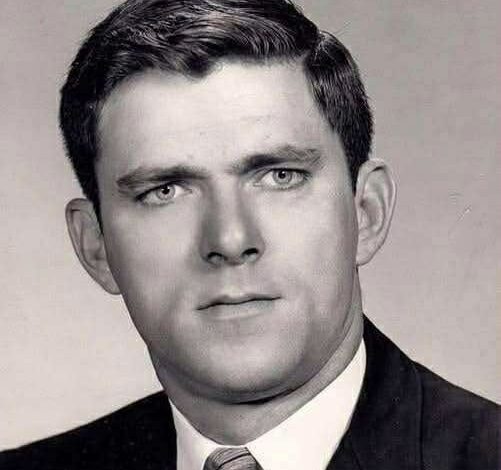
The television screen flickered, and suddenly, the loudest, most dangerous voice in America was silenced forever. Phil Donahue didn’t just host a show; he ripped the mask off daytime television and forced us to stare directly into the soul of the nation. He was the man who turned your living room into a battlefield, exposing scandals, secrets, and systemic rot that the powers-that-be desperately wanted to keep hidden. When he left the stage for the last time, an entire era of truth-telling died with him. But was he a hero, or a man who invited chaos into our homes?
Phil Donahue’s absence feels like losing a town square disguised as a talk show. Before the age of curated influencers and scripted reality dramas, Donahue transformed daytime television into a sacred space where ordinary citizens could confront raw power, deep-seated trauma, and each other in real time. He operated without filters, without the safety net of a broadcast delay, and without the hollow polish that defines modern media. Every broadcast was a gamble—a high-stakes, unscripted exercise in human connection that carried the constant, exhilarating risk of being fundamentally changed by what you heard. He never promised his guests, or his viewers, that the experience would be safe; he only promised that it would be honest, and that everyone involved would finally have a chance to be seen.
To watch Donahue was to watch a master of engagement who understood that the truth is rarely comfortable. He didn’t just sit behind a desk and lob softball questions to celebrities; he walked through the audience, thrusting the microphone into the hands of the voiceless, the angry, the grieving, and the radical. He moved with a kinetic, restless energy, perpetually seeking the next revelation. He wasn’t afraid of the pregnant silence that followed a difficult question, nor was he afraid to let a guest break down or lash out. He knew that the most transformative moments on television occurred not in the scripted segments, but in the frayed edges of the conversation where people forgot they were on camera and began to speak from the heart.
In our current culture, which heavily rewards instant, manufactured outrage over the quieter virtue of patient listening, Donahue’s legacy serves as a difficult assignment rather than a mere memory. We live in an era of echo chambers, where we are constantly fed information that confirms our pre-existing biases rather than challenging them. We have become experts at performing our beliefs for digital validation, forgetting that true dialogue requires the courage to stand in a room with someone who fundamentally disagrees with you and remain curious rather than defensive. We cannot resurrect his studio, but we can resurrect his ethics: sit in the discomfort, ask the question no one wants to hear, and stay long enough to actually listen to the answer.
Donahue understood that the purpose of a conversation isn’t to win; it is to understand. He was a pioneer of the “active listener” archetype. When he looked at a guest, he looked at them with an intensity that made the rest of the room disappear. He taught us that when you hand someone a microphone, you are doing more than just amplifying their voice—you are validating their humanity. Whether he was discussing controversial social policies, human rights abuses, or the intimate struggles of family life, he brought the same level of intellectual rigor and compassionate curiosity to every single segment. He treated every guest as the protagonist of their own story, regardless of whether that story was pleasant or painful.
Today, the media landscape is fragmented, noisy, and increasingly impersonal. The mic doesn’t pass to a single, iconic successor anymore; instead, it has splintered into millions of hands. We all have the tools to broadcast our thoughts, but we have largely lost the ability to curate meaningful discourse. We are louder than ever, yet we seem to be hearing one another less. The irony of the digital age is that we are more connected than at any point in human history, yet we remain remarkably isolated in our beliefs. Donahue’s career reminds us that the sheer volume of voices in the public square is meaningless without a corresponding depth of empathy.
The true tribute to a man like Phil Donahue isn’t found in a retrospective documentary or a collection of his best clips. The real tribute is terrifyingly simple, yet profoundly difficult to execute: stop performing for an audience, start listening to the person right in front of you, and let the next hard conversation actually hurt. It is supposed to hurt, because meaningful change requires the shedding of old skin. It requires us to abandon the safety of our preconceived notions and enter the dangerous, wonderful world of another person’s reality.
If we want to honor the legacy of the man who invited us to “sit in the discomfort,” we must first be willing to take the microphone and hand it to the person we are most tempted to dismiss. We must ask the questions that keep us awake at night, even when we are terrified of the answers. We must recognize that the “town square” isn’t a place on a television set; it is the space between two people who have decided that the truth is worth the risk of being vulnerable. As we look back on the era Donahue defined, let us not just remember the drama of his show, but the discipline of his approach. He was the conductor of a chaotic, loud, and messy orchestra, and he made us believe that the music, however discordant, was worth the effort of creating it together. The screen may be dark, but the conversation remains open, waiting for us to pick up where he left off.