After 38 Years at the Diner, My New Boss Demoted Me for Being “Too Old” — Then 70 Loyal Customers Took a Stand
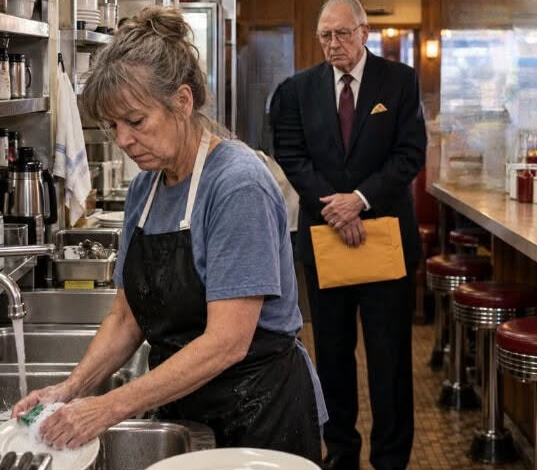
At 62, after nearly four decades of pouring coffee and remembering every customer’s favorite breakfast, I never imagined I’d end up scrubbing dishes in a cramped, windowless room.
But that’s exactly where Chad Whitmore, the 30-year-old owner of Gus’s Diner, sent me after deciding his restaurant needed “younger faces” serving customers.
He called it a favor. I’d keep the same pay, he explained, but I would no longer work at the counter where I’d spent 38 years building relationships with the people who came through our doors.
My hands were swollen from arthritis, and my knees hurt with every step. The hot, exhausting dishwashing station made my pain worse, but I put on the rubber apron and got to work.
I’d started at that diner in 1988 with a four-year-old daughter, $41 in my pocket, and nowhere else to turn. Gus Petros, the original owner, had given me a chance when my life was falling apart.
I’d never forgotten his kindness—or the promise he’d made me.
After Gus died, his children sold the diner. Chad renamed it “Rise & Grind” and changed almost everything. He raised prices, eliminated paper menus, and even started charging customers for coffee refills.
The regulars weren’t happy, but I never expected what happened next.
The morning after my demotion, customers began arriving before breakfast. Soon, every booth and counter seat was occupied. More than 70 loyal customers had gathered inside.
Madison, the young waitress hired to replace me, approached the first table.
“What can I get for you today?”
The customers gave her the same answer.
“Whatever Bev’s making.”
Chad stepped forward and explained that I’d been reassigned to the kitchen.
They refused to order without me.
Then Ed Kessler walked through the door. Ed was a quiet farmer who had eaten breakfast at the diner almost every morning for 28 years. That day, however, he wasn’t wearing his usual work clothes. He wore a suit and carried a manila folder.
He walked straight to Chad, placed the folder on the counter, and said he needed to discuss the lease.
What he revealed next changed everything.
Ed explained that he’d purchased the building in 2011 after paying off Gus’s mortgage to prevent the bank from foreclosing on the property.
But that wasn’t the most important part.
The original lease contained a signed clause requiring me to remain in my front-of-house position unless I personally agreed in writing to a change.
Chad had accepted those conditions when he purchased the business.
His decision to move me to the dishwashing station could put his right to occupy the building at risk.
Ed’s attorney was already waiting outside, ready to review the agreement.
Everyone expected me to demand that Chad be removed immediately.
Instead, I surprised them all.
I told Ed I didn’t want to throw anyone out. I wanted Chad to understand what he’d destroyed when he decided I was too old to serve customers.
“This place isn’t just a restaurant,” I explained. “It’s where grieving families find comfort, lonely people find friendship, and exhausted farmers find someone willing to listen.”
I looked directly at Chad.
“I’ll give you one chance to understand that.”
My offer was simple: he had to spend an entire day working in the dishwashing station himself, doing the job he’d decided was suitable for me.
Chad agreed.
By the end of that day, something had changed.
He returned to the counter and began undoing the changes that had driven customers away. He restored the original sign and paper menus, brought back free coffee refills, and started learning people’s names and favorite orders.
Slowly, the regulars returned.
Madison, inspired by what she’d witnessed, began considering a career in social work. She’d seen how a small act of kindness could make a difference in someone’s life.
Then Ed shared something I’d never known about him.
After his wife died, he’d come dangerously close to giving up. During that painful period, I’d helped him in the simplest way I could.
I’d brought him plain toast and expected him to return the next morning.
For years, whenever he couldn’t afford the full price, I’d quietly covered the difference so he could keep paying the $1.85 he’d been charged when he first returned to town.
I hadn’t done it for recognition. I barely remembered the individual mornings.
To Ed, however, those breakfasts had meant everything.
Eventually, he gave me an envelope to repay the kindness I’d shown him. Instead of keeping the money, I decided to put it aside for the Miller boys’ future education.
That was what Gus’s Diner had always been about: people helping one another when life became difficult.
At my 39th-anniversary celebration, Chad reached across the counter and offered me his hand.
Then he repeated the promise Gus had made to me all those years earlier.
“As long as there’s a Gus’s, there’s a Bev.”
I shook his hand, finally understanding something I’d known in my heart but had never put into words.
A restaurant’s greatest asset isn’t its building, its menu, or its profits.
It’s the people who keep showing up for one another, day after day.
And on the morning 70 customers stood up for me, they reminded me that 38 years of kindness had built something no new sign could replace.