The Tiny Scratch That Nearly Became a Medical Emergency 7 Warning Signs of Skin Infection You Should Never Ignore
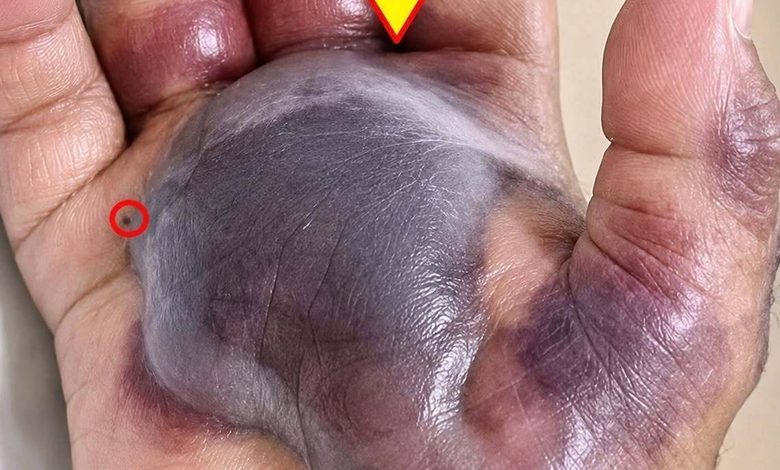
It began with an ordinary afternoon in the garden, a rose thorn, and a scratch so small it barely seemed worth noticing. A few days later, that harmless-looking injury became a frightening reminder that even the smallest wounds deserve attention.
There are moments in life that change the way we look at everyday things. Sometimes those lessons come from major events, but other times they begin with something so ordinary that we barely remember it happening.
For me, that lesson began with a rose thorn.
It was a beautiful afternoon, the kind of day that makes spending time outdoors feel like a privilege. The weather was pleasant, the garden needed attention, and I had decided to trim the rose bushes before they became too overgrown.
I had done this countless times before. Gardening was one of those simple activities that helped me relax. There was something comforting about working with my hands, caring for plants, and watching the results of a little patience and effort.
As I reached between two branches, however, a sharp thorn caught the side of my finger.
I pulled my hand back immediately.
There was a tiny scratch, a small drop of blood, and a brief stinging sensation. Nothing dramatic. Nothing that seemed remotely dangerous.
I went inside, rinsed the cut under running water, placed a bandage over it, and returned to my gardening.
Within minutes, I had almost forgotten about it.
After all, who worries about a little scratch?
That was exactly what I thought.
But several days later, something began to change.
The skin surrounding the cut looked unusually red. At first, I assumed it was part of the natural healing process. A little redness was normal, wasn’t it?
Then I noticed that the area felt warmer than the rest of my finger.
By evening, it had become tender and slightly swollen.
Still, I wasn’t particularly concerned. I told myself that my body was simply repairing the damaged skin.
The following morning, however, I noticed something I had never seen before.
A thin red line appeared to be extending away from the original injury, traveling up my finger.
The redness around the wound had also spread.
Suddenly, the scratch that had seemed so insignificant no longer looked harmless.
I made an appointment with my doctor.
After examining my hand, she explained that I had developed cellulitis, a bacterial infection involving the deeper layers of the skin. Bacteria had likely entered through the tiny opening created by the rose thorn.
She prescribed antibiotics and explained which symptoms would require urgent attention.
She also told me that delaying treatment could allow the infection to progress, potentially leading to serious complications.
I left the appointment feeling grateful that I had decided to seek medical help.
Over the following days, the infection responded to treatment, and my finger gradually returned to normal.
But the experience changed my perspective.
I realized that the seriousness of an infection isn’t always related to the size of the injury that caused it.
A wound doesn’t have to be deep, dramatic, or particularly painful at first to deserve proper care.
Fortunately, most minor cuts and scratches heal without complications. The body has remarkable defenses against infection, and ordinary wound care is usually enough.
Still, knowing when a wound is healing normally—and when it may be becoming infected—can make an important difference.
Here are seven warning signs everyone should understand.
Why Even the Smallest Skin Injury Can Become Infected
Most of us think about our skin in terms of appearance, comfort, or sensitivity.
We notice when it becomes dry, sunburned, irritated, or injured. But we rarely stop to consider how much work it performs every moment of the day.
The skin is the body’s largest organ, and one of its most important jobs is protection.
It forms a physical barrier between our internal tissues and the outside world.
Every day, our skin encounters microorganisms, including bacteria, fungi, and viruses. Many are harmless under normal circumstances, while others can cause illness when they enter vulnerable tissues.
Healthy, intact skin provides an effective defense.
But when that protective barrier is interrupted by a cut, scrape, puncture, blister, burn, or insect bite, microorganisms may gain access to the tissues underneath.
Not every wound becomes infected. In fact, most do not.
Our immune system is constantly working to recognize and eliminate potentially harmful organisms.
However, when bacteria enter a wound and multiply faster than the body’s defenses can control them, an infection may develop.
What Happens Beneath the Skin?
Imagine a small scratch on your finger.
Immediately after the injury, your body begins a carefully coordinated repair process.
Blood vessels respond to control bleeding. Platelets help form a clot, and immune cells begin clearing debris and protecting the injured tissue.
This early inflammatory response may cause mild redness, warmth, tenderness, and swelling.
These changes can be entirely normal.
As healing continues, new tissue forms and the skin gradually repairs itself.
But if harmful bacteria establish an infection, inflammation may become more pronounced instead of settling down.
The redness can spread, swelling may increase, and the affected area may become more painful.
In some cases, bacteria invade deeper layers of the skin, producing cellulitis.
The Centers for Disease Control and Prevention (CDC) identifies cellulitis as a bacterial skin infection that typically causes redness, swelling, warmth, tenderness, and pain. It can become serious when left untreated.
CDC
Why the Size of a Cut Can Be Misleading
One of the most surprising facts about skin infections is that a tiny puncture can sometimes cause more concern than a larger superficial scrape.
The reason is that certain punctures may introduce microorganisms or debris beneath the skin while leaving only a very small opening at the surface.
A thorn, splinter, nail, or other pointed object can create this type of injury.
The surface may appear to close quickly, even when irritation or contamination remains below.
This doesn’t mean every thorn prick is dangerous.
It means that appearance alone cannot always tell us everything about an injury.
The location, depth, contamination, symptoms, and health of the injured person all matter.
And recognizing a change in the wound’s condition is often more useful than focusing only on how small it looked originally.
Who Is More Vulnerable to Skin Infections?
Anyone can develop an infected wound, including young, otherwise healthy adults.
However, certain medical conditions and circumstances make infections more likely or potentially more complicated.
Older Adults
As we grow older, the skin naturally changes.
It may become thinner, more fragile, and more susceptible to tears or abrasions.
Some older adults also experience changes in immune function, circulation, mobility, or wound healing.
These factors can make injuries harder to notice or slower to recover from.
A small injury on an older person’s lower leg, for example, may require closer attention if the person also experiences swelling or poor circulation.
People With Diabetes
Diabetes deserves particular attention when discussing wound infections.
Persistently elevated blood glucose can interfere with certain immune functions and wound healing.
Some people with diabetes also experience nerve damage, especially in their feet.
This can reduce the ability to feel pain and recognize injuries.
A blister or cut may go unnoticed until the surrounding tissue has already become irritated or infected.
For people with diabetes, new foot wounds should be taken seriously and assessed promptly.
People With Weakened Immune Systems
Some illnesses and medical treatments make it harder for the body to fight infections.
Examples include certain immune disorders, chemotherapy, organ-transplant medications, and prolonged use of some immune-suppressing drugs.
For these individuals, a seemingly ordinary wound may deserve earlier medical assessment.
People With Chronic Skin Conditions
Conditions such as eczema, athlete’s foot, and chronic skin ulcers can damage the skin barrier.
Cracks and irritated areas may create openings through which bacteria can enter.
Repeated scratching may also increase vulnerability.
People With Poor Circulation or Chronic Swelling
Good circulation helps deliver oxygen, nutrients, and immune cells to injured tissues.
When circulation is impaired, wounds may heal more slowly.
Persistent swelling, including lymphedema, can also increase susceptibility to cellulitis.
Understanding these risk factors isn’t meant to make people fearful of everyday injuries.
Rather, it helps explain why the same small scratch may require different levels of attention in different individuals.
7 Early Warning Signs That a Small Wound May Be Infected
The difficult part about recognizing infection is that some symptoms overlap with normal healing.
Mild redness, swelling, and tenderness can occur even when a wound is recovering normally.
The important questions are whether those symptoms are improving, worsening, spreading, or appearing alongside other concerning changes.
1. Redness That Spreads Beyond the Original Wound
A small amount of redness immediately surrounding a fresh cut is common.
This happens partly because the body increases blood flow to the injured area as part of its healing response.
In a normally healing minor wound, that redness should generally begin to settle rather than continually expand.
When an infection develops, however, the surrounding skin may become increasingly inflamed.
You might notice that a small red border has grown noticeably wider overnight.
Or perhaps an area that was initially confined to the tip of a finger now extends across the finger or onto the hand.
These changes deserve attention.
Warning signs include:
Redness expanding outward from the wound.
Increasing discoloration accompanied by pain, warmth, or swelling.
A red or darker streak extending away from the injury.
Rapid changes over several hours.
On darker skin, inflammation may appear purple, brownish, or darker than the surrounding skin rather than bright red.
A spreading streak can sometimes indicate inflammation involving lymphatic vessels, a condition called lymphangitis, and should be assessed urgently.
That was the symptom that finally convinced me to seek medical help.
Until that moment, I had been treating my injury like a harmless irritation.
Seeing that line made me realize something more significant might be happening.
Any rapidly spreading skin discoloration, particularly when accompanied by fever or chills, warrants immediate medical attention.
2. Pain That Gets Worse Instead of Better
Pain is one of the body’s most useful warning signals.
After a minor injury, discomfort is expected.
A fresh scratch may sting when washed. A cut near a joint might feel sore when the skin stretches. A bruise may ache when pressure is applied.
But uncomplicated minor injuries generally become less painful as healing progresses.
An infection can reverse that pattern.
Instead of gradually improving, the wound becomes increasingly tender.
A mild sting turns into throbbing.
An area that was comfortable yesterday may become painful even without being touched.
Sometimes the discomfort feels deeper than the visible injury would suggest.
That progression matters.
Severe pain that seems dramatically disproportionate to the injury, especially when it develops quickly, can indicate a serious condition requiring emergency evaluation.
It’s also important to remember that not everyone experiences pain in the same way.
People with nerve damage may have reduced sensation, even when a wound is becoming worse.
For this reason, pain should be considered alongside visible changes, swelling, fever, and other symptoms.
3. Swelling That Continues to Increase
Some swelling is a natural response to injury.
When tissue is damaged, blood vessels become more permeable, allowing fluid and immune cells to reach the affected area.
That process helps repair the wound.
However, swelling should generally stabilize and gradually improve as a minor injury heals.
Infection may cause swelling to persist or worsen.
For example, a small scrape near a fingernail might initially produce slight puffiness.
But if the entire fingertip becomes noticeably swollen, tight, and increasingly tender, the change deserves assessment.
Swelling may also interfere with movement.
A person with an infected hand might find bending a finger uncomfortable or difficult.
Infections affecting the hand can be especially concerning because tendons, joints, and other important structures occupy a relatively small area.
Increasing swelling accompanied by difficulty moving the finger, severe pain, or reduced sensation should not be ignored.
4. Unusual Warmth Around the Injury
Have you ever touched a sore area of your skin and noticed that it feels hotter than the surrounding tissue?
Warmth is one of the classic signs of inflammation.
It occurs partly because blood flow increases in response to injury or infection.
Mild warmth soon after an injury doesn’t automatically mean something is wrong.
But persistent or increasing warmth, particularly when combined with spreading redness and tenderness, can suggest infection.
One simple observation is to compare the affected area with nearby unaffected skin.
Does the injured finger feel noticeably warmer than the others?
Is the warmth extending beyond the original wound?
Has it become more noticeable since yesterday?
These details can be useful when describing symptoms to a healthcare professional.
However, temperature differences alone cannot reliably diagnose an infection.
A clinician will consider the overall appearance of the area, the person’s symptoms, and relevant medical history.
5. Fever, Chills, or a General Feeling of Illness
An infected wound doesn’t always remain a purely local problem.
When an infection produces a wider inflammatory response, a person may begin feeling unwell.
They might experience fatigue, chills, sweating, headache, or fever.
A body temperature of 100.4°F (38°C) or higher is commonly considered a fever.
But the absence of fever does not rule out a serious infection.
Some older adults and people with weakened immune systems may have severe infections without developing a high temperature.
In addition, certain medications can suppress fever.
The combination of a worsening skin injury and new systemic symptoms is particularly important.
Imagine noticing increasing redness around a cut and then developing shaking chills that evening.
That is not something to simply observe for several more days.
Seek immediate medical attention.
If symptoms include confusion, difficulty breathing, fainting, severe weakness, or clammy skin, emergency evaluation is necessary because these can occur with sepsis or other serious illnesses.
The key lesson is that symptoms involving the whole body deserve special attention when there is also a suspected infection.
6. Pus, Cloudy Drainage, or an Unpleasant Odor
Not all fluid coming from a wound is a sign of infection.
During early healing, some superficial injuries release a small amount of clear or pale-yellow fluid.
This can be a normal part of the body’s response.
Pus is different.
It is usually thicker and may look white, yellow, greenish, or cloudy.
Pus contains immune cells, tissue debris, and sometimes bacteria.
Its presence can indicate a localized infection or an abscess.
An infected wound may also produce increasing drainage, develop new crusting, or have an unpleasant odor.
However, color alone doesn’t establish a diagnosis.
For example, yellowish material on a wound isn’t always pus, and some infections produce very little visible drainage.
The overall pattern matters.
If the wound becomes increasingly painful, swollen, warm, or discolored while producing thick drainage, it should be medically assessed.
One mistake people sometimes make is attempting to squeeze or open a suspected abscess at home.
That can injure surrounding tissue, introduce additional microorganisms, or spread infection.
Some abscesses require drainage performed by a healthcare professional, often in addition to other treatment.
Trying to force the contents out yourself is not a safe substitute.
7. A Wound That Refuses to Improve
One of the simplest ways to evaluate a minor injury is to observe its direction of progress.
Is it getting better?
Or is it getting worse?
Not all wounds heal at exactly the same speed.
Healing depends on injury size, location, blood supply, age, underlying health conditions, and other factors.
A shallow scratch may improve within a few days, while a deeper injury can take considerably longer.
However, a minor wound that shows no improvement, repeatedly reopens, becomes larger, or develops new symptoms deserves medical attention.
Pay special attention to wounds that develop dark or discolored tissue, increasing drainage, expanding redness, or worsening pain.
For people with diabetes, poor circulation, or weakened immunity, waiting several days may not be appropriate.
A wound on the foot, particularly when sensation is reduced, may require prompt professional evaluation even if it appears small.
The most useful rule is not that every injury must heal within a fixed number of days.
It is that a wound should generally move toward healing, not steadily toward greater inflammation and damage.
What You Should Do When You Suspect a Wound Is Infected
One of the biggest mistakes people make is waiting for an infection to become unmistakably serious before seeking help.
It’s understandable.
Nobody wants to schedule a medical appointment for something that might turn out to be a minor irritation.
We tell ourselves that the swelling will disappear, that the redness will fade, or that the soreness is simply part of healing.
Sometimes those assumptions are correct.
But when symptoms are clearly worsening, waiting can allow an infection to progress.
The safest approach is to pay attention to changes and respond appropriately.
Contact a Healthcare Professional
If you notice spreading redness, increasing pain, pus, worsening swelling, or other signs of infection, contact a healthcare professional promptly.
A clinician can examine the wound and determine whether the symptoms represent normal inflammation, an allergic reaction, an infection, or another problem.
Some infections require oral antibiotics. Others may need drainage or additional treatment.
If cellulitis is diagnosed, antibiotic treatment is commonly required.
The CDC recommends immediate medical attention when skin redness spreads rapidly or fever or chills develop.
CDC
Keep Track of Changes
If redness is present, gently marking its outer boundary with a pen can help show whether the affected area is expanding.
You can also take a photograph and record the time.
This information may help a healthcare professional evaluate the progression.
However, tracking symptoms should never delay urgent care.
If redness is spreading rapidly, a streak is appearing, or you feel seriously unwell, seek medical attention rather than waiting to collect more observations.
Avoid Squeezing or Cutting the Area
A swollen wound or small collection of pus may create the temptation to squeeze it.
Resist that temptation.
Applying pressure or trying to cut open an infected area can damage tissue and make the situation worse.
A healthcare professional can determine whether drainage is necessary and perform it safely.
Do Not Rely on Painkillers Alone
Over-the-counter medications may reduce discomfort, but they do not eliminate a bacterial infection.
Feeling temporarily better after taking pain relief does not necessarily mean that the underlying problem has resolved.
Pain management can be part of care, but it should not replace appropriate medical evaluation.
Simple Wound Care That Can Help Prevent Infection
Fortunately, preventing many wound complications doesn’t require expensive products or complicated routines.
Often, the most effective habits are straightforward.
The American Academy of Dermatology recommends cleaning minor wounds gently, maintaining a moist healing environment with petroleum jelly, and protecting them with a clean bandage.
aad.org
+1
Step 1: Wash Your Hands Before Touching the Injury
Before handling a fresh cut, wash your hands thoroughly with soap and water.
This reduces the chance of transferring dirt and microorganisms from your fingers to the damaged skin.
If you’re helping another person, clean hands are equally important.
Step 2: Control Any Bleeding
For a bleeding minor cut, apply gentle, steady pressure using clean gauze or a clean cloth.
Most superficial bleeding stops with direct pressure.
If bleeding is heavy, spurting, or cannot be controlled, seek emergency care.
Likewise, deep wounds, serious hand injuries, loss of sensation, or injuries affecting movement require prompt evaluation.
Step 3: Clean the Wound Thoroughly but Gently
Rinse the wound with clean running water.
Use mild soap to clean the surrounding skin and remove visible dirt.
Avoid aggressive scrubbing, which may damage delicate tissue.
If debris remains deeply embedded, don’t dig into the wound with household tools.
Seek medical assistance instead.
Frequent use of harsh antiseptics, such as hydrogen peroxide or rubbing alcohol, can irritate healing tissue. Gentle cleaning is usually sufficient for ordinary minor cuts.
Step 4: Keep the Healing Surface Protected
For a clean, uncomplicated minor cut, a thin layer of plain petroleum jelly can help maintain a moist environment favorable to healing.
Contrary to a widespread belief, most minor wounds do not need routine antibiotic ointment.
Antibiotic creams may cause allergic contact dermatitis or irritation in some people.
The American Academy of Dermatology specifically advises that uncomplicated minor wounds generally do not require topical antibiotics when they are cleaned and cared for appropriately.
aad.org
Step 5: Apply a Clean Dressing
Cover the injury with a sterile or clean, appropriate bandage.
A dressing provides protection against friction, dirt, and accidental reopening.
Replace it daily or whenever it becomes wet, dirty, or loose.
Continue protecting the wound while it remains open or vulnerable.
Step 6: Observe the Healing Process
Each time you change the bandage, take a moment to look at the wound.
Notice whether the redness is decreasing.
Check whether swelling has improved.
Consider whether the area is less painful than before.
These observations can help you recognize potential problems early.
And remember, if the condition worsens rather than improves, professional evaluation may be needed.
The Hidden Concern With Garden Injuries: Tetanus
My experience with the rose thorn also taught me something important about puncture wounds.
Skin infection isn’t the only issue worth considering.
Tetanus is a serious illness caused by a toxin produced by Clostridium tetani, bacteria whose spores can be present in soil and the environment.
The bacteria can enter through damaged skin, including puncture wounds.
Although tetanus is uncommon in countries with widespread vaccination, it remains a potentially severe condition.
The important point is that even a wound without visible infection may require assessment of tetanus vaccination status.
For people who completed the primary tetanus vaccination series, CDC guidance generally recommends a booster when the last dose was 10 or more years ago for a clean, minor wound, or 5 or more years ago for a dirty or major wound, including puncture injuries.
People with an unknown or incomplete vaccination history may need additional protection.
CDC
A rose thorn puncture contaminated with soil may fall into a higher-risk wound category.
Therefore, if you’re unsure when you last received a tetanus vaccine, contact a healthcare professional promptly after an injury that may be contaminated.
An antibiotic prescribed for a skin infection does not replace tetanus vaccination when vaccination is indicated.
What About Insect Bites and Stings?
Small wounds don’t always come from knives, thorns, or gardening tools.
Sometimes they begin with a mosquito bite, an ant sting, or an irritated patch of skin.
Most insect bites cause temporary redness, itching, or localized swelling and resolve without complications.
The problem can arise when repeated scratching breaks the skin.
Scratching may introduce bacteria from the hands or fingernails into irritated tissue.
For ordinary itchy bites, gently washing the area, using a cool compress, and avoiding scratching may help.
An appropriate over-the-counter anti-itch treatment can also provide relief when used according to its directions.
However, an allergic reaction can look different from a bacterial infection.
A large local reaction to an insect sting may cause considerable swelling without being infected.
Conversely, increasing pain, spreading warmth, pus, and fever may suggest infection.
Rapid swelling of the lips, tongue, or throat, difficulty breathing, or faintness after a sting may indicate a severe allergic reaction and requires emergency care.
Learning to recognize these differences can help people respond appropriately instead of assuming every swollen bite needs antibiotics.
Frequently Asked Questions About Infected Cuts and Scratches
Can a Very Small Scratch Really Cause Cellulitis?
Yes.
Cellulitis can develop when bacteria enter through a disruption in the skin, even one that initially appears insignificant.
Common bacterial causes include certain species of Streptococcus and Staphylococcus.
However, the vast majority of ordinary scratches do not develop into serious infections.
Cleaning and protecting the wound helps reduce risk, and recognizing worsening symptoms helps ensure timely treatment when necessary.
How Can I Tell Normal Healing Apart From Infection?
Normal healing may involve temporary redness, mild tenderness, and slight swelling.
The overall pattern should generally move toward improvement.
An infection is more concerning when redness spreads, swelling increases, pain becomes progressively worse, or pus appears.
Fever and chills are additional warning signs.
It’s important to remember that no single symptom proves whether an infection is present.
A medical examination may be necessary.
Is a Red Streak Always Dangerous?
A red or darkened streak extending away from a wound can indicate inflammation of lymphatic vessels associated with infection.
It should be assessed urgently, particularly if the surrounding area is warm, painful, or swollen.
A streak doesn’t automatically mean bacteria have entered the bloodstream, but it can signal a condition requiring prompt treatment.
Can an Infected Wound Heal Without Antibiotics?
Some very superficial localized infections may resolve with appropriate care, but not every infection is suitable for home treatment.
Cellulitis usually requires prescription antibiotics.
An abscess may require professional drainage.
Using an over-the-counter ointment as a substitute for assessment can delay necessary treatment.
If an infection is spreading or symptoms are worsening, seek medical care.
Why Are Hand and Foot Infections Especially Concerning?
Hands contain closely packed tendons, joints, nerves, and other structures that can be affected by deeper infections.
Increasing pain, swelling, or difficulty moving a finger after a puncture wound deserves prompt evaluation.
Feet are particularly vulnerable in people with diabetes, reduced sensation, or poor circulation.
In such cases, a wound may be more serious than it initially appears.
Can a Skin Infection Lead to Sepsis?
Yes, although severe complications are uncommon, a skin infection can sometimes lead to sepsis.
Sepsis occurs when the body’s response to an infection causes potentially life-threatening organ dysfunction.
Warning signs can include confusion, rapid breathing, extreme discomfort, fever or chills, clammy skin, and an unusually fast heartbeat.
The CDC emphasizes that suspected sepsis is a medical emergency requiring immediate treatment.
CDC
What If My Wound Doesn’t Hurt?
The absence of pain doesn’t guarantee that an injury is harmless.
Some people, particularly those with diabetes-related nerve damage, may have reduced sensation.
Others may develop infections with relatively little early discomfort.
Appearance, swelling, drainage, temperature changes, and overall health remain important considerations.
When Should I Seek Help for a Bite or Puncture?
Deep punctures, injuries contaminated with soil, wounds containing foreign objects, and human or animal bites may require professional assessment even before infection develops.
Depending on the circumstances, clinicians may need to consider thorough cleaning, tetanus protection, antibiotics, or rabies exposure evaluation.
The NHS recommends urgent assessment for wounds that remain dirty after cleaning, show signs of infection, or result from certain bites.
nhs.uk
The Lesson I Took Away From That Afternoon in the Garden
I still enjoy gardening.
I still love being outside, working among the flowers, and watching new growth appear after weeks of care.
And yes, I still occasionally encounter an unexpected thorn.
But I approach small injuries differently now.
I no longer assume that a wound deserves no attention simply because it is tiny.
I clean it carefully.
I protect it when necessary.
I pay attention to the healing process.
And when something looks unusual, I take that change seriously.
The experience didn’t make me afraid of ordinary cuts or scratches.
Instead, it taught me that common sense and early action are valuable forms of self-care.
We often expect serious health problems to announce themselves dramatically.
We imagine severe pain, unmistakable symptoms, or obvious physical changes.
Yet sometimes a medical problem begins quietly.
A little warmth.
A patch of expanding redness.
An ache that becomes stronger instead of weaker.
A small wound that simply doesn’t seem to be improving.
Most of the time, our bodies handle minor injuries remarkably well.
But when an injury begins moving in the wrong direction, listening to those warning signs matters.
And that’s the message I hope others take from my experience.
Don’t judge an injury only by how small it looks. Pay attention to how it changes.
A few moments spent cleaning a wound, checking your vaccination history, or consulting a healthcare professional when symptoms worsen may help prevent a much more difficult problem later.
Sometimes the smallest warning signs deserve the greatest attention.
And sometimes the most important health lesson begins with something as ordinary as a rose thorn.
Have you ever experienced a tiny cut, scratch, or insect bite that unexpectedly became a bigger problem? What was the first warning sign you noticed? Share your experience in the comments—your story might help someone recognize a problem before it becomes more serious. 
