Trump Responds to “Pope Leo” Controversy—But There’s One Major Problem With the Story
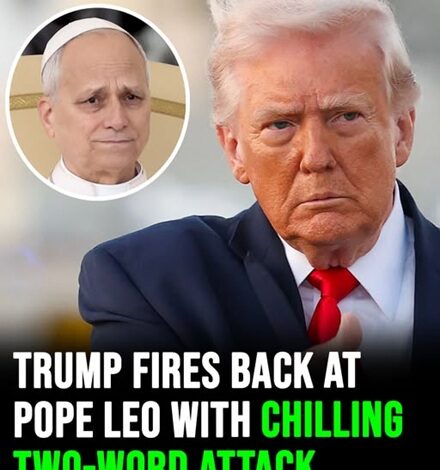
A story spreading across social media claims that Donald Trump fired back at a pope over U.S. actions in Iran.
There’s just one issue…
The pope in that story doesn’t exist.
Over the past few days, viral posts have been circulating online describing a supposed confrontation between Trump and a figure referred to as “Pope Leo XIV.”
According to these claims, the pope allegedly criticized escalating tensions in the Middle East, warning that certain military actions could increase global instability and violate international norms.
The posts go even further.
They describe a speech delivered at St. Peter’s Basilica, where the pope reportedly called for peace, restraint, and moral responsibility among world leaders.
Some versions even include direct quotes—strong language condemning war, power, and political dominance.
But here’s where the story begins to fall apart.
There is no verified evidence that any of this actually happened.
No official Vatican transcripts.
No press coverage from credible international outlets.
No confirmed speech.
And most importantly…
No pope by that name.
The current leader of the Catholic Church is Pope Francis—not “Pope Leo XIV.”
That detail alone raises serious questions about the authenticity of the entire narrative.
Despite this, the viral posts continue.
They claim Trump responded publicly, allegedly criticizing the pope and questioning his understanding of global politics.
Some versions even suggest Trump made strong remarks on social media, calling the pope “weak” on foreign policy.
Again—none of this is backed by any verified source.
No official statement.
No confirmed interview.
No credible report.
So what’s really going on?
Experts say this is a classic example of how misinformation spreads.
Take real-world tensions—like ongoing discussions about Iran, global conflict, and diplomacy.
Add recognizable names—Trump, the Vatican, world leaders.
Then mix in fictional dialogue and dramatic confrontation.
The result?
A story that feels real… but isn’t.
This type of content is designed to trigger emotion.
It sparks outrage, curiosity, and debate—making people more likely to share it without checking the facts.
And once it spreads, it becomes harder to separate truth from fiction.
In reality, while global leaders and religious figures do sometimes disagree publicly, those moments are almost always documented.
They appear in official statements, verified interviews, or widely reported news coverage.
None of that exists here.
The bigger takeaway?
Not everything that looks like news… is news.
Before believing or sharing viral stories—especially ones involving major political figures or global institutions—it’s worth taking a second look.
Because sometimes, the most convincing stories…
are the ones that were never real to begin with.