Aneurysm: Warning Signs You Should Never Overlook
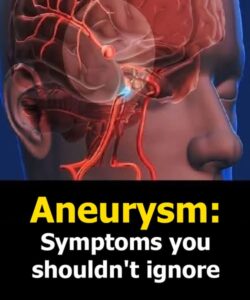
Aneurysms are among the most misunderstood medical conditions, largely because they often develop silently and remain undetected for long periods of time. This lack of visibility creates space for assumptions and myths to take hold, many of which can be dangerous. People tend to associate serious health risks with noticeable symptoms, but aneurysms challenge that expectation. In many cases, nothing feels wrong until a critical moment occurs. This gap between presence and perception is what makes awareness so important.
Not in a way that creates fear, but in a way that promotes informed attention to the body and its signals. One of the most persistent misconceptions is that aneurysms are primarily a condition affecting older adults. While it is true that age increases risk due to gradual wear and tear on blood vessels, aneurysms are not limited to any single age group.
The integrity of blood vessel walls depends on complex biological structures, including collagen and elastin, which provide both strength and flexibility. In some individuals, these components may be compromised early in life due to genetic conditions or developmental factors, making aneurysms possible even in younger populations.
Inherited disorders such as Ehlers–Danlos syndrome or Marfan syndrome can weaken connective tissues throughout the body, including those in blood vessels. These conditions may not always be immediately obvious, yet they can significantly increase the likelihood of aneurysm formation.
Additionally, congenital abnormalities—structural differences present from birth—can create نقاط of vulnerability in arterial walls. When combined with environmental factors like smoking or chronic high blood pressure, the risk can increase further and appear earlier than expected.
Another widespread misunderstanding is the belief that the absence of symptoms indicates the absence of danger. In reality, many aneurysms remain completely asymptomatic for years. This silence does not mean the condition is harmless; it simply means the aneurysm has not yet affected surrounding structures or reached a critical stage. The arterial wall may already be weakening gradually under constant pressure from blood flow, a process influenced by hemodynamic forces that are not felt consciously.
Over time, this persistent pressure can cause the vessel wall to bulge outward, forming what is known as an aneurysm. The process is typically slow and influenced by factors such as blood pressure levels, vessel wall composition, and localized stress points within the artery. As the wall stretches and thins, its ability to withstand pressure diminishes. Eventually, if the structural integrity becomes too compromised, rupture can occur, often without prior warning.
Headaches are another area where misunderstanding is common. Because headaches are so frequent and usually benign, they are often dismissed without much thought. However, not all headaches are the same. A sudden, severe headache—sometimes described as the worst headache a person has ever experienced—can be a critical warning sign. This type of pain may indicate bleeding in the brain, specifically a subarachnoid hemorrhage, which occurs when an aneurysm ruptures.
This kind of headache is typically abrupt and intense, reaching peak severity within seconds or minutes. It may be accompanied by additional symptoms such as nausea, vomiting, neck stiffness, sensitivity to light, blurred vision, or confusion. These signs reflect irritation of the brain’s protective layers and increased pressure within the skull. Unlike typical headaches, this presentation requires immediate medical evaluation and should never be ignored or treated as routine discomfort.
There is also a common assumption that maintaining a healthy lifestyle eliminates the risk of aneurysms entirely. While healthy habits such as balanced nutrition, regular exercise, and avoiding tobacco significantly reduce many health risks, they do not guarantee complete protection. Aneurysms can still develop due to underlying biological processes that are not always visible or preventable. These include low-grade inflammation within the vessel wall and gradual degradation of structural proteins over time.
At the same time, it is equally misleading to believe that every aneurysm will inevitably rupture. In reality, many aneurysms remain stable and never cause serious problems. The risk of rupture depends on several factors, including the size of the aneurysm, its location, how quickly it is growing, and the overall health of the blood vessel. Medical professionals evaluate these variables carefully when deciding whether to monitor an aneurysm or recommend treatment.
Treatment approaches vary based on individual circumstances. In some cases, doctors may suggest regular imaging tests to track any changes over time. In others, preventive procedures such as surgical clipping or endovascular coiling may be recommended to reduce the risk of rupture. These decisions are highly personalized and based on a detailed assessment of risks and benefits, rather than a one-size-fits-all approach.
At its core, an aneurysm is a structural issue involving the weakening of a blood vessel wall. This weakening is influenced by a combination of biological and mechanical factors. Proteins like elastin provide flexibility, while collagen offers strength. When these components are disrupted—whether through aging, genetic factors, or inflammation—the vessel wall becomes more vulnerable to deformation under pressure.
Blood flow itself plays a role in this process. The force exerted by circulating blood is not evenly distributed throughout the vascular system. Certain areas, particularly where arteries branch or curve, experience greater stress. Over time, these نقاط can become sites where aneurysms are more likely to form. This interaction between biology and physics highlights the complexity of the condition.
Although many aneurysms remain silent, the body can sometimes provide subtle warning signs before a rupture occurs. An unruptured aneurysm that presses on nearby nerves may cause localized symptoms. These can include pain behind or above one eye, changes in vision such as double vision, a drooping eyelid, or weakness on one side of the face. While these symptoms may seem minor or unrelated, they can be important clues that should not be overlooked.
When rupture does occur, the situation becomes a medical emergency. Symptoms typically appear suddenly and may include a severe headache, vomiting, stiff neck, confusion, seizures, or loss of consciousness. These signs indicate bleeding in or around the brain and require immediate medical attention. Rapid response can significantly affect outcomes, making it critical to recognize these warning signals without delay.
Ultimately, aneurysms exist in a space where they are both silent and potentially severe. This dual nature makes them particularly challenging, as they do not always provide clear early warnings. However, understanding the condition, recognizing possible symptoms, and seeking timely medical care when something feels unusual can make a meaningful difference.
Awareness should not lead to unnecessary fear, but rather to informed vigilance. Paying attention to sudden or unusual symptoms, managing risk factors like high blood pressure, and discussing family history with a healthcare provider are practical steps that can help reduce risk. In this way, knowledge becomes a tool for prevention and early detection, rather than a source of anxiety.