A Father Noticed His Baby’s Unusual Habit—What It Led Him to Discover Was Completely Unexpected
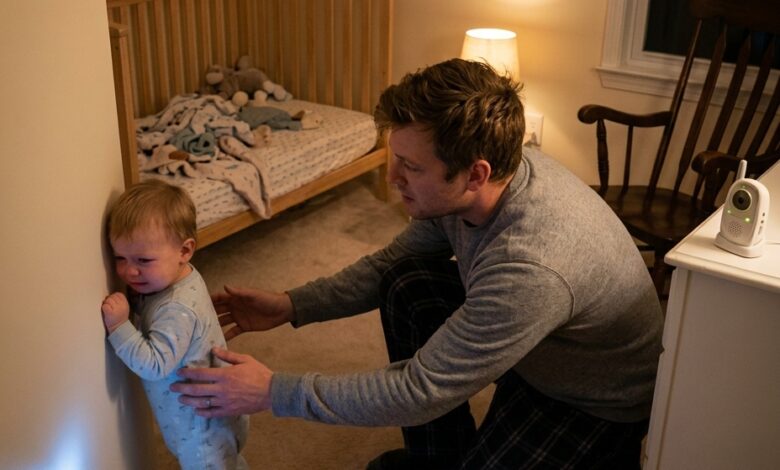
At first, it seemed like just another toddler habit. But every single day, without fail, one-year-old Ethan would walk to the same corner of his nursery, press his face against the wall, and stand there quietly. No toys, no laughter—just stillness. His father, David, began to feel uneasy as the routine repeated itself hour after hour. It wasn’t playful behavior, and it wasn’t random. It felt intentional, as if the child was responding to something no one else could see or understand.
Concerned, David decided to seek professional advice. When a child development specialist, Dr. Mitchell, visited their home, she carefully observed Ethan’s behavior. Instead of reacting with alarm, she approached the situation calmly and methodically. When Ethan repeated the same action—touching the wall and focusing on that exact spot—she began to consider possibilities that went beyond imagination. Rather than assuming something mysterious, she looked for environmental, sensory, or emotional explanations that could explain why the child was drawn to that corner.
Upon closer inspection, David noticed subtle details he had previously overlooked. The wall felt colder in that area, and there were slight irregularities beneath the paint—nothing dramatic, but enough to suggest something structural or environmental might be affecting the space. Dr. Mitchell explained that young children can be highly sensitive to changes in their surroundings, including temperature differences, echoes, or even airflow behind walls. What seemed unusual might actually be Ethan reacting to subtle cues adults typically ignore.
In the end, the situation became less about fear and more about understanding. With a proper inspection of the home and some simple adjustments, Ethan’s behavior gradually changed, and his routine returned to normal. For David, the experience was a powerful reminder of how children perceive the world differently. What may appear unsettling at first often has a grounded explanation—and sometimes, paying closer attention is all it takes to turn uncertainty into clarity.