Man receives reward after stepping in during incident involving tourist and a protected seal
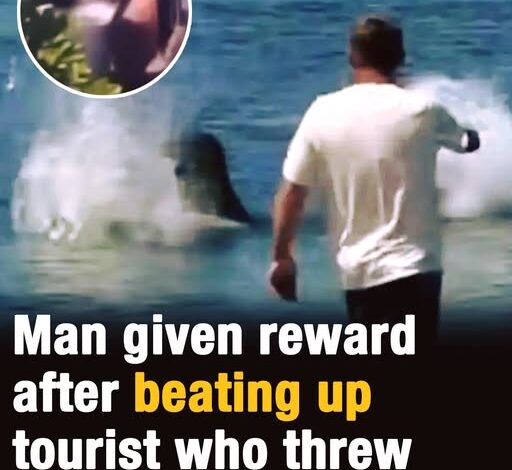
A disturbing incident unfolded along the shoreline near Front Street in Lahaina, Maui, drawing widespread attention both locally and online. According to eyewitness reports and local news coverage, a tourist from Seattle was accused of approaching a protected Hawaiian monk seal and allegedly throwing a large rock in its direction. The seal, known by residents as “Lani,” is a familiar presence in the area and has become especially cherished by the local community due to her regular appearances along the Lahaina coastline.
Witnesses at the scene reported that the seal was resting near the shoreline when the visitor repeatedly moved too close, despite warnings from people nearby. One local resident who filmed parts of the incident described the object as being approximately the size of a coconut. Video footage shared with media outlets captured bystanders reacting in shock, questioning the man’s behavior, and expressing concern for the animal’s safety. The situation quickly escalated as more beachgoers became aware of what was happening.
The Hawaiian monk seal is recognized as one of the most endangered marine mammals in the world. It is protected under strict federal and state laws, including the Endangered Species Act and the Marine Mammal Protection Act. Conservation agencies such as NOAA Fisheries have long emphasized the importance of minimizing human interaction with these animals, as their population remains fragile and continues to face environmental threats. Because of this, any form of disturbance or harm is treated seriously under conservation regulations.
As the incident developed, emotions among those present on the beach became increasingly heightened. Witnesses reported that tension spread quickly after it became clear what had allegedly occurred. Shortly afterward, a confrontation took place between a local individual and the tourist.
This altercation was captured on video and later circulated widely on social media platforms, where it became the subject of intense public debate.
Online reactions to the incident were immediate and strongly divided. Many users expressed outrage over the alleged treatment of the endangered seal and voiced support for strict protection of wildlife in Hawaii. Others focused on the physical confrontation that followed, emphasizing that while the situation was emotionally charged, violence is not an appropriate response under any circumstances. The incident quickly evolved into a broader discussion about tourism behavior, wildlife protection, and how such situations should be handled responsibly.
Local officials in Maui also responded to the event, highlighting the importance of respecting both the natural environment and cultural values of the Hawaiian Islands. Community representatives reiterated that wildlife such as monk seals are deeply connected to the region’s ecological identity and are protected by law. Authorities reminded visitors that clear guidelines exist for interacting with or observing protected species, and any violation of these protections may result in legal consequences.
Further reports indicated that the tourist involved was later identified by authorities and questioned regarding the incident. According to statements shared by the Department of Land and Natural Resources (DLNR), the matter was referred for additional review under applicable federal marine protection laws. Officials noted that, at the time of initial reporting, no criminal charges had been filed, and the case remained under investigation as authorities continued to gather information.
Meanwhile, residents of Lahaina continued to express concern for the well-being of the seal known as Lani. For many in the community, she represents more than just a wild animal; she is viewed as part of the local coastal environment that residents actively observe and help protect.
Her presence has become a symbol of recovery and continuity for some, especially in the years following environmental and natural disruptions in the region.
Local leaders also used the incident as an opportunity to reinforce messages about responsible tourism. They emphasized that Hawaii’s natural ecosystems depend on careful stewardship and that visitors are expected to act with respect toward both wildlife and cultural traditions. Public statements stressed that incidents involving protected species are taken seriously and that the state remains committed to enforcing environmental protection laws.
The event has since continued to circulate in public discussion, raising broader questions about human interaction with endangered wildlife, enforcement of conservation rules, and the responsibilities of visitors in sensitive natural habitats. While the legal process remains ongoing, the incident has already left a strong impression on those who witnessed it and on the wider community concerned with protecting Hawaii’s fragile marine ecosystem.