Virginia Giuffre’s cause of death accidentally revealed in Epstein files
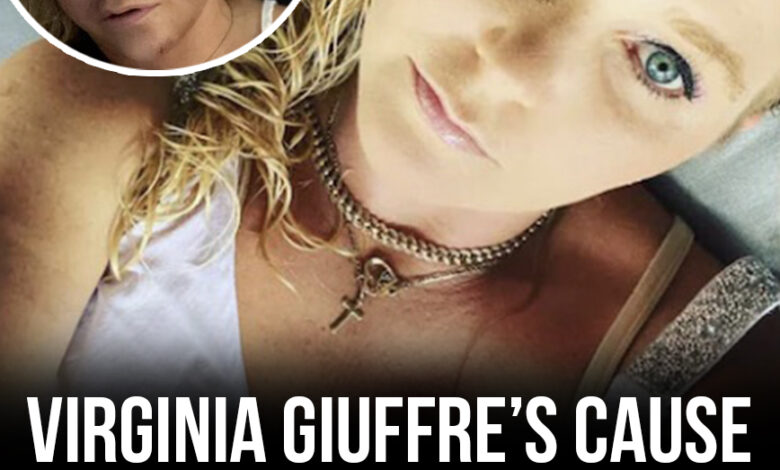
It has been nearly a year since the death of Virginia Giuffre sent shockwaves through the international community, yet the circumstances surrounding the final days of Jeffrey Epstein’s most vocal accuser remain shrouded in ambiguity. Despite the passage of time, no official cause of death has been confirmed, leaving a void filled by speculation, grief, and a renewed demand for answers.
Giuffre, who became a global symbol of resilience after accusing Epstein and several high-profile associates of sexual abuse, passed away on April 25, 2025, at her home in Neergabby, Western Australia. She was 41 years old.
While initial reports characterized the tragedy as a suicide, local authorities have maintained a cautious stance. Though officials noted that “early indications” suggested the death was “not suspicious,” a formal investigation remains ongoing. The lack of a definitive post-mortem conclusion has only intensified the scrutiny of her “personal circumstances”—details of which, as noted by the BBC, remain largely obscured from public view.
A Father’s Rejection of the Official Narrative
The theory of suicide has met fierce resistance from Giuffre’s family, most notably her father. In a high-profile interview with Piers Morgan, he pointedly rejected the suggestion that his daughter took her own life, sparking a wave of debate over the security of those who speak out against the powerful.
“For them to say that she committed suicide, there’s no way that she did,” he told Morgan, suggesting a darker alternative. “Somebody got to her.”
This narrative of foul play, however, stands in contrast to the perspective of Giuffre’s Australian legal counsel. Attorney Karrie Louden has publicly stated that she does not believe the death was suspicious.
“The Coroner will determine in due course the cause of death, and that will be established based on the evidence,” Louden stated, urging patience as the judicial process moves forward.
The Epstein Files: A New Catalyst for Inquiry?
The timing of this tragedy has become even more significant following the Trump administration’s recent disclosures of the “Epstein Files.” With millions of pages of investigative material now entering the public domain, investigators and journalists alike are combing through the data to see if recent disclosures shed any light on the pressures Giuffre faced in her final months.
The documents, released under the Epstein Files Transparency Act, reveal the staggering scale of the network Giuffre fought to expose. As the world parses these new revelations, the focus remains on the Western Australia Coroner’s Office. For Giuffre’s supporters, the eventual report will represent more than just a medical conclusion; it will be the final chapter in the story of a woman who dedicated her life to bringing the truth to light.
Until that report is finalized, the questions surrounding the April 25 tragedy remain some of the most sensitive and contested elements of the broader Epstein saga.
Investigation Update: Unintended DOJ Disclosures Point to Manner of Giuffre’s Death
While the official coronial inquiry in Western Australia has yet to release its formal findings, a massive data leak from within the United States Department of Justice appears to have confirmed the grim details surrounding the passing of Virginia Giuffre.
Documents contained within the final release of the 3.5 million-record archive related to the Jeffrey Epstein investigation reportedly reveal that the 41-year-old survivor died by suicide at her Neergabby farmhouse on April 25, 2025.
The disclosure occurred after a series of “technical and human errors” by federal staff led to the brief publication of unredacted personal correspondence. According to reporting by the Daily Mail, these documents included private emails that offer a visceral look at the emotional toll Giuffre endured in her final months.
The Maria Farmer Correspondence
Central to these new revelations is an email dated May 8, 2025, sent by fellow Epstein survivor and advocate Maria Farmer. Farmer, who famously attempted to alert the FBI to Epstein’s activities as early as 1996, reportedly detailed the tragedy in a message to Giuffre’s high-profile legal team, including attorneys David Boies and Sigrid McCawley.
The leaked email contained a stark confirmation of the method:
“She died from a self-inflicted gunshot wound last week at her home in Australia,” Farmer allegedly wrote.
A Breach of Privacy Amidst Public Interest
The accidental release of these messages has sparked a secondary controversy regarding the DOJ’s handling of survivor privacy. The Department of Justice scrambled to redact and remove the files once the error was identified, but not before the contents were cataloged by news outlets and researchers.
For those close to Giuffre, these emails highlight a heartbreaking reality: while she was a fierce advocate on the global stage, she was privately navigating the compounding trauma of her long-running legal battles against the Epstein estate and his associates.
The revelation of these private messages provides a sobering context to the “staggered disclosures” mentioned by the administration, underscoring the human cost of a transparency process that continues to fluctuate between political milestone and personal tragedy.
The newly exposed correspondence from Maria Farmer, sent under the evocative subject line “Abusing public victims has real consequences,” offers a raw and devastating look at the internal collapse felt by those within Giuffre’s inner circle.
Farmer’s words paint Giuffre not just as a legal figurehead, but as a central pillar of hope for other survivors. “I have no idea how to survive now. She was our leader, our purpose,” Farmer wrote, describing the “agonizing” impact on Giuffre’s children. “My raison d’être was Virginia… She was pure LIGHT.”
A Direct Indictment of Federal Inaction
Farmer’s grief quickly sharpened into an indictment of the FBI, whom she accuses of systemic negligence. Her emails demand that the bureau “feel DEEP SHAME” for allegedly ignoring her early warnings.
“I reported to FBI TEN YEARS PRIOR TO THIS HERO BEING KIDNAPPED AND RAPED AS A CHILD!!!” Farmer wrote. “The FBI really damaged society when they refused to listen to the fact children were being harmed!”
Turbulence in the Final Months
While Giuffre was a symbol of strength to the public, the documents reveal a harrowing period of personal instability leading up to her death. In January 2025, during a family holiday in Dunsborough, police responded to a domestic dispute involving Virginia and her husband, Robert Giuffre.
While no criminal charges were filed, the fallout was severe: Robert obtained a restraining order that barred Virginia from seeing her children for six months. The separation appeared to be a breaking point for the advocate, who posted on Instagram: “I have been through hell and back in my 41 years but this is incredibly hurting me worse than anything else.”
The Question of Intent: Suicide or “Misadventure”?
Outside the Neergabby farmhouse shortly after the tragedy, Giuffre’s lawyer and confidante, Karrie Louden, expressed a sense of total blindsiding. Louden noted there were “no signs” of suicidal ideation that would have prompted them to seek clinical intervention.
Louden remained cautious about the finality of the “suicide” label, suggesting that the line between intent and accident remains blurred.
- The “Misadventure” Theory: Louden noted that Giuffre had recently been hospitalized and was on various medications.
- The Uncertainty: “Has she just taken too many painkillers? Was she intentionally doing it?” Louden asked rhetorically. “I’m not going to speculate whether it was suicide or accidental.”
The FBI’s Counter-Narrative
Even in the wake of her death, the tension between Giuffre and federal investigators remains unresolved. Internal FBI memos included in the release show that the bureau consistently disputed several of her core allegations, specifically regarding the trafficking of girls to other high-capacity individuals—claims the FBI noted were not corroborated by other victims. The memo characterized Giuffre’s testimony as containing “shifting accounts” and “sensationalized if not demonstrably inaccurate characterizations.”
As Virginia Giuffre is laid to rest on her estate in Neergabby, the accidental release of these private struggles and federal rebuttals has recast her legacy. It serves as a sobering reminder of the immense, often fatal, pressure placed on survivors who choose to fight their battles in the unrelenting glare of the public eye.